Why Are Galapagos Penguins Endangered?
We are reader-supported. When you buy through links on our site, we may earn affiliate commission.
The Galapagos penguin is the only penguin species that lives north of the equator. Even though it has a unique physical ability to handle tropical temperatures, it faces multiple environmental stressors that threaten its survival.
A Fragile Population
The Galapagos penguin is officially endangered, according to global conservation authorities, with the current population estimated at 2,000 to 3,000 individuals. These small marine birds live mostly on the western islands of Fernandina and Isabela, where they rely on the cold and nutrient-rich waters the current brings to the surface.
Because they are endemic to the Islands, their restricted geographic range makes them exceptionally vulnerable to environmental changes. While other species can easily migrate when climate conditions decline, Galapagos penguins stay. Such isolation means any small change in the environment can have catastrophic effects on the entire population. Losing just one breeding colony is already a massive blow to their overall numbers.
7 Threats to the Galapagos Penguin
Scientists at the University of British Columbia found that Galapagos penguins have the highest level of microplastic contamination per unit of biomass in their local food web. This discovery highlights the intense pressure the species endures. Seven primary threats were identified as causing their endangered status.
1. Climate Change and The El Niño Effect
The El Niño Southern Oscillation is a natural weather phenomenon that dramatically warms the ocean surface across the eastern Pacific, disrupting the cold water currents the Galapagos marine ecosystem needs to survive. As surface water temperatures rise rapidly, nutrient-rich upwellings cease entirely, making it difficult for marine predators to find enough food near their breeding locations.
Without these essential nutrients, large schools of small fish like sardines and mullet leave the coastal waters, creating severe and widespread food scarcity for the penguins. During intense El Niño events, which are now occurring more frequently each year, penguin mortality rates surge sharply due to mass starvation, even causing the population to drop by as much as 77%. Such rapid shifts give the coastal ecosystems very little time to recover before the next warming cycle begins.
2. Predation from Non-Native Species
The World Wildlife Fund says the Galapagos penguin is the second-most-endangered penguin species in the world. When ships first arrived at the islands hundreds of years ago, they brought with them land-based predators that established feral populations that continue to alter the local ecosystem.
Feral cats, stray dogs, introduced pigs, and black rats aggressively hunt the penguins along the rocky shorelines. These predators consume unhatched eggs, target vulnerable chicks and even attack full-grown adults. Because the penguins evolved in an isolated environment with few natural mammalian predators, they lack defensive skills. Such an evolutionary disadvantage makes their ground-level nests easy targets for hungry terrestrial mammals.
Although conservationists and park rangers implement strict biosecurity measures across the area, controlling these wild populations requires extensive logistical coordination and funding.
3. The Dangers of Bycatch
Bycatch is when commercial fishing nets catch marine life that is not the target species. Local and industrial fishing operations often use large, nearly invisible gillnets in the productive waters surrounding the islands. These nets are designed to catch commercially valuable fish, but they can also indiscriminately trap any marine animal swimming through them.
Once entangled, the penguins either suffer severe injuries or drown before fishermen can even retrieve the gear. The overlap between commercial fishing zones and vital penguin feeding grounds makes bycatch a persistent problem the already dwindling population struggles to get through each day.
Even as environmental policies introduce safer zones and alternative fishing technologies to accommodate both commercial fishing and wildlife and reduce incidental catches, enforcing regulations across massive stretches of open water is challenging.
4. Avian Disease Outbreaks
The birds of the Galapagos evolved without exposure to many common continental diseases. Therefore, they are highly susceptible to illness when any new pathogen enters the area. A foreign disease can spread instantly through the defenseless coastal colonies.
Avian malaria is one of the most severe and immediate threats to this population. The mosquitoes that carry the disease have become more prevalent due to shifting global climate patterns. Warmer regional temperatures enable these insects to thrive and reproduce in coastal areas previously considered too cold. This means that a single widespread malaria outbreak could decimate penguin numbers within a single breeding season.
5. Pollution and Contaminants
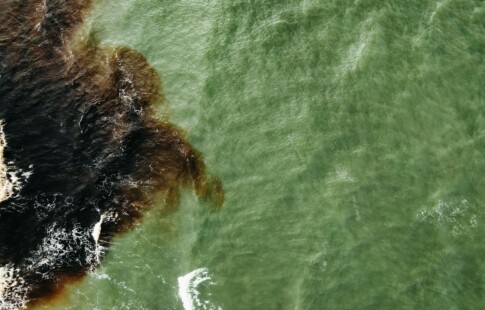
Industrial oil spills and agricultural runoff from populated islands introduce toxic chemicals into the surrounding water, contaminating the environment penguins need for daily survival. In addition, large quantities of plastic debris continually wash ashore from across the Pacific Ocean and leave a steady stream of garbage on the rocky beaches where the birds attempt to build their nests.
Pollutants harm penguins through physical ingestion or by contaminating their food sources. When small fish consume degraded microplastics, the toxins transfer into the digestive tracts of the birds that eat them. Over time, the accumulation of chemicals weakens the penguins’ immune systems and severely reduces their overall reproductive success. Even remote coastal areas far from human settlements show signs of severe marine debris accumulation.
6. Human Disturbance and Habitat Loss
The Galapagos Islands host hundreds of thousands of international visitors each year. Commercial boats, cruise ships, small watercraft and tour groups constantly move through the narrow channels where the penguins hunt. The continuous noise and water disturbance not only increase stress levels and reduce chick survival rates, but also force the birds to expend extra energy to avoid human activity.
While park authorities strictly manage tourist traffic, the sheer volume of human foot traffic continues to degrade the fragile coastal habitat. Expanding urban settlements and new coastal developments are also forcing the penguins out of their preferred breeding grounds.
7. Limited Genetic Diversity
Over decades of declining numbers, the Galapagos penguins have lost significant genetic variation because small biological populations inherently have a narrow gene pool. When a penguin population drops to just a few thousand individuals, inbreeding becomes inevitable, thereby creating a biologically uniform community that shares the same vulnerabilities.
The limited genetic makeup restricts their ability to adapt to long-term environmental changes. This means that when faced with novel diseases or sudden ecological changes, the entire species reacts the same way. This leaves no resilient subgroups capable of surviving disturbances to rebuild the population later.
Charting a Course for Penguin Survival
A comprehensive conservation plan is needed to secure the future of Galapagos penguins. While local environmental groups actively deploy artificial nests to boost breeding along coastlines, much still needs to be done to eradicate invasive predators from critical islands to shield vulnerable chicks. That’s not to mention the pollution and human presence that continue to threaten their daily life. Ultimately, the Galapagos penguin’s long-term survival depends on sustained global cooperation. By addressing climate change and restricting destructive fishing practices, the world can stop this beautiful species from disappearing completely.
Share on
Like what you read? Join other Environment.co readers!
Get the latest updates on our planet by subscribing to the Environment.co newsletter!
About the author

Steve Russell
Steve is the Managing Editor of Environment.co and regularly contributes articles related to wildlife, biodiversity, and recycling. His passions include wildlife photography and bird watching.