From a Murder of Crows to a Parliament of Owls: Strange Animal Group Names
We are reader-supported. When you buy through links on our site, we may earn affiliate commission.
If you’ve ever called a group of animals a “bunch” and moved on with your life, this might change you forever. Somewhere out there, a group of crows is committing a murder, owls are holding a parliament, and flamingos are apparently hosting a flamboyance. Strange animal group names are one of those delightful corners of language that feel slightly unhinged but make a little sense.
Since many animals naturally stick together, humans have long tried to capture the vibes these groups give off using a mix of imagination and humor. Some names are poetic, some dramatic, and some feel like inside jokes that just stuck. Once you learn them, you can’t unlearn them — and you’ll never look at a gathering of birds, bugs, or beasts the same way again.
The History of Collective Nouns in Animalia
These delightfully creative words are not a modern internet invention. They’ve been around for centuries. Back in 1486, Dame Juliana Berners, a noblewoman-turned-nun, decided to publish The Book of Saint Albans. It was essentially a medieval hobby guide for gentlemen, which covered hunting, hawking, and heraldry.
As a casual bonus, she included an appendix listing 165 names for groups of animals most frequently encountered in hunting. It was less a scientific classification and more of a nomenclature mischief that survived long enough to still delight and confuse people to this day.
Land Mammals
Here’s a comprehensive list of what humans have been calling land animals when they gather in groups, so you can impress your friends the next time you’re at the zoo.
| Animal | Group Name | Explanation |
| Apes | A shrewdness | Apes are indeed clever, but the old English meaning of the word shrewd used to mean mischievous. Both encapsulate their cheeky behavior. |
| Antelope | A herd | Herd is primarily used for large land mammals that find safety in numbers to confuse predators. |
| Badgers | A cete, clan, or colony | Cete is the archaic collective term for badgers. They’re also referred to as a clan or colony, and they live in tight-knit and territorial underground systems. |
| Baboons | A troop | These ground-dwelling monkeys may be loud, but they protect each other in organized groups like a unit of soldiers. |
| Bats | A cauldron or colony | They swirl out of caves, which befits the slightly spooky collective noun that fits their nocturnal reputation and associations with Halloween. |
| Bears | A sloth or sleuth | Both sloth and sleuth have Middle English roots that can be slow-moving when relaxed and surprisingly investigative when curious. |
| Beavers | A colony | Beavers are builders, planners, and community-focused to their core. |
| Boars | A sounder | Likely named for the noise they make, rooting and grunting together. |
| Bobcats | A clutter | While generally solitary animals, when bobcats congregate, they look like a disorganized, messy group. |
| Bucks | A brace or clash | Bucks and other game animals are called a brace, meaning a pair caught or served together. They’re also called a clash as a nod to their antler locking behavior during mating season. |
| Buffalo | A gang, obstinacy, or herd | Buffaloes are notoriously stubborn and often exhibit mafia-like behavior, such as blocking roads and circling back at predators. |
| Camels | A caravan | Camels look like desert travelers journeying together in a line. Fun fact — did you know camels can eat cacti with ease? |
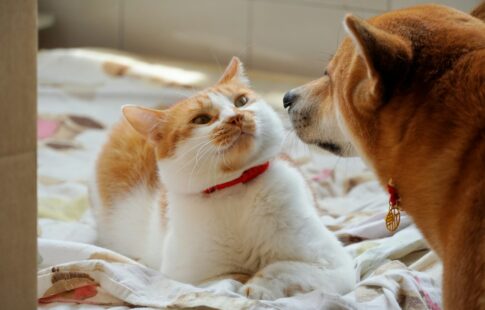
| Cats | A clowder, a pounce, or a glaring | Clowder and clutter share roots with the word clotter. It’s a chaotic gathering that’s socially distant and intensely judgmental. |
| Kittens | A kindle, a litter, or an intrigue | Kindle comes from Middle English, meaning ‘offspring’. Litter originally meant the birthing straw bed that now refers to a group of newborns. They’re also called an intrigue for their natural curiosity and tendency to constantly plot something. |
| Cattle | A drove | This refers to a group of animals being driven or moved together. |
| Cheetahs | A coalition | Cheetahs form strategic partnerships, often between brothers from the same litter, to defend territories against rivals. |
| Cows | A kine | Kine is an old plural derived from the Old English ‘cyna’. Now it remains valid but a bit antiquated. |
| Coyotes | A band | A group of coyotes is called a band because they form smaller family units than the large packs associated with wolves. |
| Cubs | A litter | Litter originally referred to the straw bedding used for birthing, but today it describes all young animals born at the same time, whether lion, tiger, or bear cubs. |
| Deer | A herd | Like antelopes, deer display classic prey behavior. They herd together to stay alive. Interestingly, stags, or male deer, are called bachelors because they form non-aggressive groups outside the breeding season. |
| Dogs | A pack | Dogs are descendants of wolves and carry over the social behavior of living and cooperating in groups to ensure survival. While your domesticated pet dog may not typically live in strict hierarchical packs, the phenomenon is still evident in free-range dogs that form loose temporary groups within neighborhoods. |
| Donkeys | A pace or drove | While often called a herd, the term pace is more accurate, since donkeys walk in a steady, synchronized manner. They’re also called drove because they are often moved as a group by owners. |
| Elephants | A parade, herd, or memory | Parade fits their majestic, slow-moving nature, and they often march in a single file, much like a celebratory procession. Meanwhile, memory reflects their highly developed temporal lobes, which ensure survival. |
| Elk | A gang | Gang refers to bachelor herds of young bulls. It’s also fitting since these large mammals are known for raiding farms, haystacks, and fences. They’re definitely not ones to be messed with. |
| Ferrets | A business | The term evolved from the Middle English word ‘busyness’, which reflects their highly active, curious, and chaotic nature. They certainly think everything is their business! |
| Foxes | A skulk | Skulk comes from a Scandinavian word that means ‘to lurk’. They’re stealthy and patient predators who lie in wait for their prey. |
| Giraffes | A tower | Fittingly, giraffes grow as tall as 5.5 meters or 18 feet. They tower over all land animals and vegetation in their habitat. |
| Goats | A tribe or trip | A group of goats is called a tribe because they live in social, close-knit communities with the common dialect of “meeh”. They’re also referred to as trip, which comes from the Middle Dutch word ‘trippen’, a reference to their hopping, skipping nature. |
| Gorillas | A band | A dominant silverback leads the band in their tightly organized harem structure. Groups may have several males alongside multiple females and juveniles, but only one is in charge. |
| Guinea pigs | A muddle | Guinea pigs scurry around in the most chaotic and jumbled fashion. Fun fact, the little jump they make when they’re full of energy is called popcorning! |
| Greyhounds | A leash | In Medieval hunting, greyhounds were often grouped in sets of three by a single leash. |
| Hares | A down or husk | The word stems from ‘downy’, which could refer to their soft fur. Another interpretation suggests that the term could refer to their behavior of breeding and boxing in grassy areas called downs. Why they’re called ‘husk,’ no one knows. |
| Hedgehogs | An array | Hedgehogs are primarily solitary creatures, so when you see a group of them, they look like an orderly, impressive collection. |
| Hippos | A bloat or thunder | Hippos are large and look like swollen masses in water. Meanwhile, thunder refers to the loud wheeze-honks they make, which can reach up to 115 decibels. |
| Hogs | A passel or drift | Passel is derived from parcel, and it signifies a sizable gathering of hogs. Meanwhile, very young pigs that roam without their mothers are called a drift. |
| Horses | A team or harass | Two horses pulling a carriage or plow are called a team because they work in unison. A harass of horses has French roots and can mean a stud farm where mares and stallions are kept for breeding. |
| Hounds | A pack or cry | These scent-driven dogs hunt in packs, echoing their wild ancestors. When on a trail, they give a resounding howl call known as baying. A full cry erupts when every hound in the pack voices together on the scent line of a fox. |
| Hyenas | A cackle | Hyenas don’t actually laugh, but their high-pitched calls sound like eerie giggles when heard in a group. It may seem playful, yet the sound is usually triggered by stress, excitement, or tension over a carcass — not joy. |
| Jaguars | A shadow | These big cats of Latin America are called a shadow for their remarkable stealth. Black panthers, especially, look like living darkness slipping through the undergrowth. Fun fact — “black panther” isn’t a separate species. It’s a general term for a melanistic jaguar or leopard. |
| Kangaroos | A mob or troop | They may not be doing organized crime, but these large, aggressive mammals often dominate open lands. |
| Lemurs | A conspiracy | Lemurs are highly intelligent creatures, and when they work together to mob predators, they’re conspiring to outwit them. |
| Leopards | A leap | A group of leopards is called a leap because of their incredible, athletic ability to jump, spring, and pounce. |
| Lions | A pride | The king of the beasts leads his pride with the most noble demeanor. A pride often consists of related females, their offspring, and a few resident males. Meanwhile, a group of only male lions is called a coalition — much like an alliance of kings. |
| Martens | A richness | These weasel-like mammals are called ‘rich’ because of their valuable, luxurious fur. The pelts were used as currency and as a form of payment in medieval Croatia, Slavonia, and Dalmatia. |
| Mice | A mischief | Small but with a big reputation for trouble, a group of mice is called a mischief. Catch them chewing through wires and furniture, and taking a bite out of food in your cupboards. |
| Moles | A labor | Their intense, industrial behavior digging tunnels says it all. |
| Monkeys | A troop or barrel | The phrase originally came from “a box of monkeys,” a reference to how they were once transported. It later evolved into “a barrel of monkeys” thanks to the 1960s plastic toy where linked monkeys are pulled from a barrel. Otherwise, they’re simply called a troop. |
| Mules | A pack or span | Mules have long been known as beasts of burden that carry heavy loads on their backs. When they’re harnessed together to pull a wagon or plow, they’re called a span from the Dutch word ‘spannen’, meaning to unite. |
| Opossums | A passel | It refers to the parcel that a mother opossum carries — a litter of up to 13 joeys on her back! |
| Oxen | A yoke | A yoke refers to the wooden frame that harnesses together two oxen. It allows them to move as one and double their pulling power. |
| Pigs | A sounder or passel | Perhaps it’s because of their squeaky grunts, but a sounder is the name for a family group of two or more sows or adult female pigs and their young. Boars or adult male pigs usually live alone and only join the group to breed. |
| Porcupines | A prickle | Porcupines are prickly creatures, and their over 30,000 sharp, barbed quills cover their bodies to protect them from predators. |
| Rabbits | A warren or colony | ‘Warenne’ is an Anglo-French term referring to enclosed land used in the 12th century for the production of rabbit meat and fur. Today, it refers to the complex underground tunnel colonies that rabbits dig for shelter. |
| Raccoons | A gaze | A group of raccoons is called a gaze because of their curious habit of standing on their hind legs and staring intently when cautious or intrigued. |
| Rhinos | A crash | They’re huge, they’re fast… and bam! They crash through everything in their path! This may be due to their poor eyesight or a bold defensive display to scare off threats. |
| Sloths | A bed or snuggle | Nothing is more fitting for these slow and sedentary creatures’ lifestyles. In fact, sloths sleep for up to 20 hours a day. |
| Skunks | A stench | Skunks often spray a pungent, sulfur-rich, oily liquid from their butts as a defense mechanism, so a group of skunks definitely produces a stench. |
| Squirrels | A scurry | These frantic movers are always in a hurry, scurrying about and rustling through the trees. |
| Rats | A mischief | Like their smaller mouse relatives, rats are called a mischief because they’re notorious for destructive behavior, spreading disease, and trouble wherever they go. |
| Tigers | An ambush or streak | These solitary hunters are built for sudden attacks. While it’s rare to see them grouped, it emphasizes just how lethal they are. Meanwhile, a streak refers to a mother tiger with her cubs, primarily because of their black and orange stripes. |
| Weasels | A gang | These small, crafty creatures are famous for their nimbleness, slipping into tight spots to snatch prey. In folklore, they’re often shown as coordinated gangs of thieves — just like in Disney’s The Adventures of Ichabod and Mr. Toad. |
| Wolves | A pack | Wolves live in structured, hierarchical groups called packs. They stay together for survival, hunting, and raising pups. Fun fact — in the wild, there’s no “alpha” wolf at all. A pack is simply a breeding pair, the mother and father, raising their offspring. |
| Wombats | A wisdom | This whimsical collective noun reflects the wombat’s self-sufficient, wise nature in their simple and hardy approach to life in the Australian mountainous regions. |
| Zebras | A zeal | Zebras are lively animals with plenty of personality. A newborn foal can walk within 20 minutes of birth and be running an hour later — talk about boundless energy! |
Aquatic Mammals
These water-loving mammals rely on both marine and freshwater habitats to survive, and they’ve evolved unique adaptations that help them thrive in each environment.
| Animal | Group Name | Explanation |
| Dolphins | A pod | While dolphins are too big to be “peas in a pod”, they do form tight-knit groups called pods, typically ranging from a few individuals up to 30. Sometimes, they gather into superpods that can include hundreds or even thousands of dolphins. |
| Manatees | An aggregation | While manatees are usually solitary and don’t form permanent groups, they often form clusters in winter when seeking warm water. |
| Otters | A romp or raft | A romp means rough, playful action, which fits otters perfectly. Highly social and energetic, they wrestle, chase, and tumble together. When they float side by side on the water, the group is aptly called a raft. |
| Porpoises | A pod, school, herd, or turmoil | While school usually brings fish to mind, porpoises can also be called a school. Even more fun, they’re sometimes called a turmoil of porpoises because of their chaotic, constantly splashing behavior. |
| Whales | A pod, gam, or herd | Gam was a 19th-century term for two or more whaling ships gathered at sea, a term that whales naturally adopted for themselves. |
Birds
Birds are highly social creatures, often gathering in flocks for safety and to conserve energy, especially while flying.
| Animal | Group Name | Explanation |
| Birds in general | A volery | The word comes from the Latin volare, meaning “to fly,” and perfectly captures the magic of a flock of birds soaring together through the sky. |
| Bitterns | A sedge | Bitterns rely on the grass-like plants called sedges, which make up the marshland vegetation in their habitat. They camouflage among the reeds and stand as if frozen and part of the backdrop. |
| Buzzards | A wake | In America, ‘buzzard’ is an informal term for a vulture, which fits their scavenging habits. They often gather around carcasses as if holding a solemn wake. This term is mainly used when they assemble at a feeding site or perched in large, watchful groups. In Europe and Asia, a buzzard is actually a type of hawk — a true bird of prey, not a scavenger. |
| Bobolinks | A chain | These tiny birds are often seen chasing each other while perching in neat rows. |
| Chicken | A brood | The term originates from broody hens, which are mother chickens sitting on their eggs to incubate them. |
| Chicks | A clutch, chattering, or peep | A clutch is the nestful of eggs that, once hatched, turn into a nonstop chatterbox squad with their constant “peep-peep” calls. |
| Coots | A cover or commotion | These medium-sized water birds gather in large, dense groups on the water, so packed that thousands of them can seem to cover the entire surface. Their gregarious, sometimes aggressive gatherings are enough to cause a real commotion! |
| Cormorants | A gulp | Cormorants don’t have teeth, so they’ve developed a unique feeding style — they catch fish and swallow them whole in a single, impressive gulp. |
| Crane | A sledge or siege | Cranes are exceptionally noisy birds, and when thousands gather, the sound can be overwhelming. It’s almost like they’ve just sieged a town during migration. |
| Crows | A murder, horde, or mob | While they aren’t truly criminal-minded, medieval superstition gave these black birds a reputation for death and associated them with battlefields and graveyards. When they gather, they form an unruly, mischievous crowd. |
| Dotterel | A trip | Migrating dotterels are like birds on a road trip. They form temporary groups at stopovers to feed before continuing to their high-altitude breeding grounds. |
| Doves | A dule, pitying | Dule comes from the French word ‘deuil’, meaning deep sorrow or grief, and is the collective noun for the American mourning dove. Meanwhile, pitying is a poetic 15th-century term for a group of turtle doves, inspired by their soft, melancholic cooing. |
| Ducks | A brace, team, skein, flock, raft, paddling, waddling, or badling | Ducks boast a surprisingly long list of group names. A brace refers to two ducks — a hunting term for a pair of bagged game. In the sky, when flying in synchronized V-formation, they’re called a team for their coordinated effort. On the water, they form a raft, and when actively swimming, they paddle. As for badling? It doesn’t mean they’re misbehaving. It’s simply an archaic malapropism of paddling that waddled its way into the language. |
| Eagles | A convocation, or soar | Eagles are mostly solitary and pair for life, so when they gather near abundant food sources or huddle together at winter roosts to conserve body heat, it feels less like a crowd and more like a grand meeting. In the air, they soar in reverence. |
| Emus | A mob | These large flightless birds roam in nomadic groups, and with their dinosaur-like build, dagger-sharp claws, and powerful kicks, they’re an intimidating sight. They even have a tongue-in-cheek history of defeating the Australian military, making them a truly formidable bunch. |
| Falcons | A cast, kettle, or bazaar | These hunting birds were once cast from a falconer’s glove. Now it means two or more falcons. When they spiral skyward in a tight, swirling formation, they form a kettle. They’re called a bazaar in a nod to the Falcon Souq of the Middle East, where these prized birds have long been bought, sold, and traded. |
| Finches | A charm | The term likely comes from the Middle English word ‘chirme’, meaning a chattering or chirping noise. But with their tiny, colorful bodies and lively personalities, it’s easy to see why people call them a charm. |
| Flamingos | A flamboyance, stand, or colony | Their striking pink and elegant stance makes every gathering a true flamboyance. |
| Geese | A flock, gaggle, or skein | These large waterfowl are called a gaggle thanks to the loud, chaotic honking they produce on the ground. But when they take to the sky in a graceful V-formation, they become a skein. |
| Grouse | A covey or pack | A covey is a 14th-century hunting term for game birds that now refers to a breeding pair and their young. These chicken-like birds often gather in packs during fall and winter, banding together as the seasons turn colder. |
| Hawks | A cast, kettle, or boil | The term cast comes from medieval falconry, when two birds were released from the glove to hunt, and it has since come to mean a pair of birds. When they spiral in the sky, they’re called a kettle or a boil. |
| Herons | A sedge or siege | These marsh-dwellers hide in sedges, and when grouped, they stand still like a besieging army. |
| Jays | A party or a scold | Jays are notoriously loud and boisterous. They’re a party when together, and a scold when squawking at intruders as if angry. |
| Lapwings | A deceit | These clever birds are deceptive, and they use distracting behaviors to protect their ground-level nests. |
| Larks | An exaltation or ascension | Larks are known for singing in a soaring, upward pitch, as if lifting their voices and bodies. |
| Mallards | A sord or brace | Sord has 15th-century origins from ‘sourde’, derived from the Middle English ‘sorden’, meaning “to rise in flight.” On the ground, a group of mallards is called a sord because they haven’t taken to the air yet, while a brace refers to a pair — a term rooted in hunting. |
| Magpies | A tiding, tittering, gulp, mischief, parliament, or charm | Magpies have long been linked to good or bad tidings in Old British folklore. Their constant chattering earns them the nickname ‘tittering,’ like a lively debating parliament. Gulp comes from their habit of quickly devouring food, and their love of shiny objects and playful tricks marks them as mischievous. Despite it all, their intelligence makes them truly charming creatures. |
| Nightingales | A watch | Their nocturnal singing keeps watch over the night. |
| Owls | A parliament of wisdom | With solemn faces and wise eyes, they seem to hold a council meeting. |
| Parrots | A pandemonium or company | These colorful chatterboxes bring chaos wherever they go. They’re highly social birds who live, travel, and forage in groups. |
| Partridges | A covey | The word comes from the Old French ‘covee’ and the Latin ‘cubare’, meaning “to sit, incubate, and hatch.” While it originally referred to a brood of chicks, it now also describes a tight-knit group of partridges. |
| Peacocks and peafowl | A muster or ostentation | Muster comes from the Old French word ‘mustier’, meaning to assemble. They gather to show off their extravagant feathers — a true display of ostentation. |
| Penguins | A colony, muster, or rookery | On land, they cluster together in rookeries like little waddling neighborhoods. |
| Pheasants | A nest, nide, nye, or bouquet | Pheasants are called nide or nye, from the French word ‘nid’, meaning “nest.” When these ground-nesters are disturbed and take flight, they’re called a bouquet, like petals scattering from a flower. |
| Pigeons | A flock, flight, ki,t or dropping | Numbers mean safety for pigeons, which is why they often congregate in groups. Well-trained birds are referred to as a kit, while city-dwelling pigeons are sometimes disparagingly called a dropping, thanks to the obvious mess they leave behind. |
| Plovers | A congregation or wing | Unlike many birds, plovers are relatively quiet when they gather on the ground. But when they take to the air, their group is called a wing. |
| Ptarmigans | A covey | Ptarmigans are ground-dwelling game birds, and their group name covey comes from mid-14th-century hunting terminology. |
| Rooks | A building | Rooks gather in treetops, building stick nests that look like small, crowded tenement houses. |
| Quails | A bevy or covey | Bevy comes from the Middle English ‘bevey’, originally used for a large group of birds gathered to bathe or drink. Covey is another fitting term, since these are ground-dwelling birds that roost together. |
| Ravens | An unkindness or conspiracy | Ravens are painted as tricksters in mythology and literature. Their gatherings often look like secret meetings plotting mischief, or, for older European folklore, a symbol of death. |
| Snipes | A walk or wisp | On land, they’re called a walk, wandering through marshy wetlands. In flight, they become a wisp, zigzagging swiftly through the air. Fun fact — the term sniper actually comes from the skill of shooting these small, fast, and highly camouflaged birds. |
| Sparrows | A host | Sparrows are great entertainers when they engage in social singing and communal activities. |
| Starlings | A murmuration | The term murmuration refers to the sounds of thousands of wings fluttering together in flight when these birds showcase their massive synchronized aerial displays. |
| Storks | A mustering or phalanx | Muster has Old French roots, meaning “assembly,” while phalanx describes a military group. When they gather, they kind of resemble soldiers with their long legs and sharp beaks all lined up in still, orderly ranks. |
| Swans | A bevy, game, or wedge | Bevy carries poetic associations with beauty and grace — perfectly suited to the choreographed, ballet-like elegance of swans on water. When they fly, they form an aerodynamic V-shaped wedge. Meanwhile, the game nods to their history in hunting and, more likely, the once-elite pastime of managing swan populations as sport and spectacle. |
| Teals | A spring | Their sudden, darting movements in water look like a lively spring. |
| Turkeys | A gang, posse, or rafter | Gobblers — the adult males of these gregarious birds — form all-male groups and are often known for their aggressive displays. Rafter comes from their habit of sleeping perched in trees or high sheltered spots, such as the rafters or roof beams of barns. |
| Vultures | A venue or wake | Wherever there’s a feast, the vultures’ gathering spot becomes a grim venue fitting for a wake. |
| Woodcocks | A fall | It refers to the sudden, large-scale arrival of migratory woodcocks into a specific area during autumn. They also look like they’re tumbling out of the sky during their sky dance mating ritual. |
| Woodpeckers | A descent | A group of woodpeckers is called a “descent” because these birds typically land at the top of a tree and forage while moving downwards along the trunk, effectively descending. |
Reptiles and Amphibians
Most of these cold-blooded creatures are solitary and territorial, so when they gather for breeding or hibernation, it’s truly a wild sight.
| Animal | Group Name | Explanation |
| Alligators | A congregation | Alligators love to bask in warm spots in the summer, often appearing inanimate but watchful in their formal assembly. |
| Cobras | A quiver | It’s not about you quivering at the sight of them, though that might happen. Rather, when cobras gather and flare their hoods, they often shake in a rapid, energetic motion. They’re not scared. They’re issuing a warning. |
| Crocodiles | A bask or float | Like their alligator cousins, crocodiles love to sunbathe to regulate their cold bodies. When they’re in the water, don’t mistake them for floating logs. Watch closely for the telltale eyes and nostrils just above the surface. |
| Frogs | An army or colony | Large migrations of frogs, especially during breeding season, can appear overwhelming — thus an army, hopping en masse across landscapes. Colony reflects their tendency to gather densely in ponds and wetlands during mating periods. |
| Rattlesnakes | A rhumba, den, or pit | Rumba music feels incomplete without the signature maracas. Meanwhile, den or pit refers to their real-life winter hiding spots where thousands coil together for warmth. |
| Toads | A knot | Toads often cluster in tangled groups during breeding, forming what looks like a living knot of warty bodies. |
| Turtles | A bale, dole, flotilla, or nest | Bale or dole suggests a bundled grouping when they’re huddled together on the shore. Underwater, they’re a flotilla when they swim together for migration. Nest connects directly to their reproductive behavior, when multiple females return to the same beaches to lay eggs |
| Salamanders | A maelstrom or congress | Maelstrom means whirlpool, reflecting their chaotic gatherings where they swirl in tangled, slippery masses while breeding or hiding beneath damp cover. Also, fun fact — the word congress once referred to coming together or sexual union, which makes it an unexpectedly fitting term for animals gathered during mating season. |
| Snakes and vipers | A nest or knot | Snakes in general gather in a nest for warmth during colder seasons, coiling together in shared dens to conserve heat. With their long bodies, they often become entangled when competing for a mate during mating season or during territorial disputes. |
Fish
Fish are an incredibly diverse group of cold-blooded aquatic animals that inhabit oceans, rivers, lakes, and streams worldwide. There are more than 33,000 recognized species of fish, outnumbering all other vertebrates — mammals, birds, amphibians, and reptiles combined!
| Animal | Group Name | Explanation |
| Fish in general | A school, shoal, run, haul, catch, or draft | A school isn’t an educational institution for fish. It comes from the Middle Dutch word ‘schole’, meaning “crowd.” It refers to a coordinated group, usually of a single species, swimming together. A shoal, in contrast, is a looser, mixed-species group that gathers for safety in numbers. When fish migrate, it’s called a run, like a salmon run. Terms like haul, catch, and draft refer to the total number of fish caught by fishermen. |
| Goldfish | A troubling or glint | While goldfish are often labeled “beginner fish,” they can actually be tricky to raise and require high-maintenance tanks. Still, they’re worth the effort. Their shiny scales glint beautifully in the light. |
| Herring | An army | Herring is derived from the German word ‘heer’, which literally means army. |
| Minnows | A steam | While Southeast Asian cuisines often steam minnows with fresh herbs and spices, steam is simply a collective term uniquely used for these tiny fish |
| Sharks | A frenzy or shiver | When multiple sharks aggressively compete over a large prey source, it can erupt into a feeding frenzy — a spine-tingling spectacle for anyone watching. |
| Stingrays | A fever | No, manta rays don’t gather because they’re sick. The term actually refers to the fever pitch of activity that’s intensely chaotic when thousands come together for mating or feeding. |
| Trouts | A hover | Trout often appear to hover or float just above the riverbed when they are stationary. |
Insects and Other Bugs
All bugs are insects, but not all insects are bugs. Bug describes a wide variety of creepy crawlies.
What makes an insect, then? They need a three-part body, six jointed legs, and an exoskeleton made of chitin. There’s no known number of how many insects there are in the world right now, but astonishingly, there are roughly 1.4 billion insects for every person in the world!
| Animal | Group Name | Explanation |
| Ants | A colony or army | Ants live in highly organized societies with roles such as egg-laying queens, mating males, workers, foragers, and soldiers. |
| Bees | A grist, hive, or swarm | Grist is an Old English word for grain to be ground at a mill, which connects to the old belief that it draws insects. The idea is later linked to bees, even though they feed mainly on nectar and pollen. When a hive becomes overcrowded, bees swarm like a dark cloud to find a new home. |
| Butterflies | A kaleidoscope or flutter | Kaleidoscope perfectly captures their collective fluttering flight that shimmers and shifts in motion. |
| Caterpillars | An army | When caterpillars move in large numbers across vegetation, they can resemble a marching army, slowly but steadily advancing in coordinated swarms. |
| Cockroaches | An intrusion | Cockroaches are infamous for appearing suddenly and in unwanted places, so a group of them is aptly called an intrusion. |
| Dragonflies | A flight or cluster | Dragonflies often patrol water surfaces in groups. Flight captures them in motion above ponds, while clusters reflect how they perch together on reeds and grasses. |
| Flies | A business, cloud, swarm, or hatch | Flies are busy bodies, buzzing and darting about constantly. When they gather in large numbers, they form a dark, hovering cloud. They’re also called a hatch, referring to their synchronized emergence when thousands emerge from their nymphal casing and take flight simultaneously. |
| Gnats | A cloud or horde | Male gnats typically rise in thick clouds above breeding sites and can be so dense they resemble a small airborne horde. |
| Grasshoppers | A cluster | Grasshoppers can cluster together in vegetation. |
| Hornets | A bike or nest | Hornets are busy, social creatures with no time for a leisurely ride. The term bike actually comes from Old English, meaning “colony.” These insects build paper-like nests, maintaining a bustling communal home. |
| Ladybugs | A loveliness | This adorable name comes from their charming, harmless appearance, even when their bright red-spotted shells gather together. |
| Lice | A flock or infestation | Though tiny, lice are often found together on a host like a tiny flock, clustering across hair or feathers. These parasitic insects produce as many as eight eggs a day over their lifetimes. |
| Locusts | A plague or cloud | Locust plagues are among the oldest recorded agricultural disasters, and when they gather in massive swarms that darken skies and decimate crops. |
| Mosquitoes | A scourge | Mosquitoes remain the world’s deadliest animal, threatening over 40% of the global population — a reflection of the immense suffering they cause. |
| Moths | An eclipse | When large numbers of moths cluster around lights or vegetation, they can literally blot out the light, like an eclipse. |
| Scorpions | A nest or bed | Scorpions often shelter together under rocks or crevices, forming a nest or bed of intertwined stingers. |
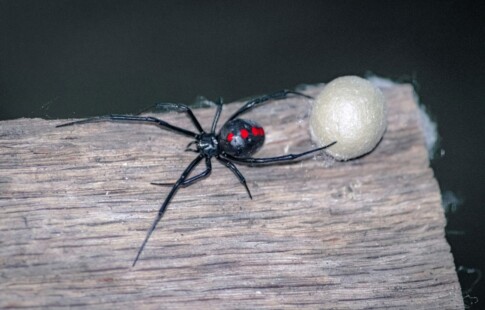
| Spiders | A cluster or clutter | Spiders may be solitary, but when grouped, they form a tangled cluster or clutter of legs and webs. |
| Termites | A brood | An entire colony is essentially a family unit originating from the same parents — the queen and king — that produces offspring that become workers and soldiers. |
| Wasps | A pledge | While most wasps are solitary insects, there remain about 1,000 species of social wasps, including the deadly hornets and venomous yellow jackets. Pledge is derived from Middle English ‘plege’ and suggests a colony bound together by community — fitting for wasps in a shared hive. |
Other Invertebrates
Invertebrates are animals that lack a backbone or bony skeleton. If you’re not familiar with them, just know that over 90% of all animals belong to this group — from insects and snails to earthworms burrowing in the soil, and even colorful sea stars, squid, and clams in the ocean.
| Animal | Group Name | Explanation |
| Snails | A hood, escargatoire, walk, or rout | A collection of snails is called a hood, perhaps whimsically inspired by the way their shells seem to cloak them like tiny hoods. The playful term escargatoire comes from the French word escargot, meaning snail, and refers to a huddled grouping. A rout describes them when they’re scattered and disorderly. They’re also called a walk, since snails move on a single muscular foot — though it looks more like they’re slowly gliding or crawling along on their bellies. |
| Clams | A bed | Clams live partially buried together beneath sand or mud along the seabed. |
| Crabs | A consortium | A consortium suggests a formal association or alliance. Crabs often gather in large numbers for molting, feeding, or migration, moving sideways in coordinated masses that look surprisingly organized — almost like a joint enterprise. |
| Jellyfish | A bloom, fluther, smack, or brood | Bloom compares their sudden population explosions to flowers, the same way brood references their rapid reproduction. As they drift through the water, jellyfish flutter and pulse. But swim through a swarm, and you might receive a sharp smack from their stinging tentacles. |
| Lobsters | A risk, pod | While the technical group name for lobsters is a pod, they’re also called a risk. It could be a nod to their vulnerability during molting, when they’re soft and exposed. Perhaps it refers to the dangers of lobster fishing in rough, cold seas, or simply because of their powerful crusher claws. |
| Oysters | A bed | Like clams, oysters attach themselves to hard surfaces in dense colonies known as oyster beds. |
| Squid | A squad or shoal | More people are playfully clamoring for squid to be called a squad. While the nickname has stuck with some, the proper collective term is a shoal, reflecting how they move together in tight, synchronized formations. |
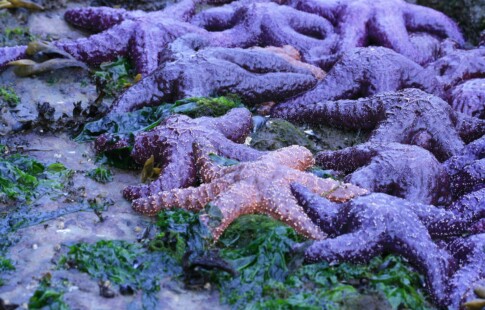
| Seastars | A galaxy | A galaxy of seastars is a poetic nod to their star-shaped bodies. When many gather, their forms resemble a constellation spread across the ocean floor. |
Other Organisms
Animals aren’t the only ones with unique collective nouns. One specific microorganism has one, too.
| Organism | Group Name | Explanation |
| Bacteria | A colony or culture | Bacteria are fascinating microorganisms. Invisible to the naked eye, they form colonies that originate from a single parent cell and reproduce into a thousand other cells. When grown deliberately in a lab on a Petri dish, this population is called a culture. |
Strange Names for Stranger Behaviors
From fun caravans and parades to eerie murders and wakes, these strange names for groups of animals capture the behavior, folklore, and pure whimsy of these creatures. These quirky names remind us that language can be as playful and mysterious as nature itself. It turns ordinary gatherings of animals into stories, metaphors, and little windows into the way humans have long observed the wild.
Share on
Like what you read? Join other Environment.co readers!
Get the latest updates on our planet by subscribing to the Environment.co newsletter!
About the author

Jane Marsh
Starting from an early age, Jane Marsh loved all animals and became a budding environmentalist. Now, Jane works as the Editor-in-Chief of Environment.co where she covers topics related to climate policy, renewable energy, the food industry, and more.