We are reader-supported. When you buy through links on our site, we may earn affiliate commission.
Mosquito seasons are extending in many regions due to shifting rainfall patterns and longer summers, compelling many households to get instant relief from chemical sprays. However, these products pose health and environmental risks, leading more people to now consider lower-impact solutions. In many cases, the answer already grows in gardens, and research is validating what communities have practiced for generations — specific types of plants release compounds that drive mosquitoes away.
Long before essential oil diffusers and “natural” spray labels, communities already used plants as their primary defense against insects. An ethnobotanical study in Ethiopia documented 19 plant species used locally as mosquito repellents, many of which were collected from nearby wild habitats.
The same researchers also found that 52.6% of respondents relied on burning fresh or dried plant parts to create smoke, which they use in sleeping areas or outdoor gathering spaces. Others hang leafy branches indoors or around animal shelters. Their plant choices were determined by what grew nearby and which plants the people found to be both effective and safe to inhale.
Studies like this bridge traditional knowledge with modern entomology and chemistry. Laboratory tests can isolate active compounds, quantify how long they can repel mosquitoes and explore whether extracts have the ability to damage larvae. Such scientific findings do not replace community experience, but rather add detail that can build safer and more consistent repellent use.
A review in the journal Pathogens pulled together evidence on dozens of botanical extracts with mosquito-repellent and insecticidal activity, including several common garden plants. Among them, citronella, lemongrass, neem, thyme, garlic, guava, and pepper species stand out for both traditional use and laboratory data.
Citronella is one of the most recognizable plants that repel mosquitoes. Many product labels borrow the name, though not all contain meaningful amounts of true citronella oil.
The aromatic grass contains compounds such as citronellal and geraniol, which interfere with mosquito host-seeking behavior. The Pathogens study notes that citronella-based formulations show strong repellency against Aedes mosquitoes, especially those with higher essential oil concentrations.
In daily use, citronella performs best when foliage and oils are placed close to where people gather. Gardeners often grow dense clumps in large containers or bed edges near entryways or patios, so that wind and passing movement release more scent into the air. Some people crush a few leaves between their fingers to intensify the aroma on clothing or nearby surfaces. Certified essential oil products can also be used in diffusers or poured into candle reservoirs to create a localized scent zone. Any skin application should use well-diluted oil to reduce the risk of irritation.
Lemongrass belongs to the same genus as citronella and has a fresh citrus scent. Its main active compound — citral — has shown repellent and insecticidal abilities against several mosquito species.
In gardens, lemongrass fits easily into edible and ornamental designs. Many growers plant it in sunny beds or in large pots near doors and outdoor kitchens, where brushing the leaves releases an immediate aroma. When mosquito activity peaks near dusk, crushing the lower stalks or snipping a few stems and gently bruising them boosts the intensity of the scent.
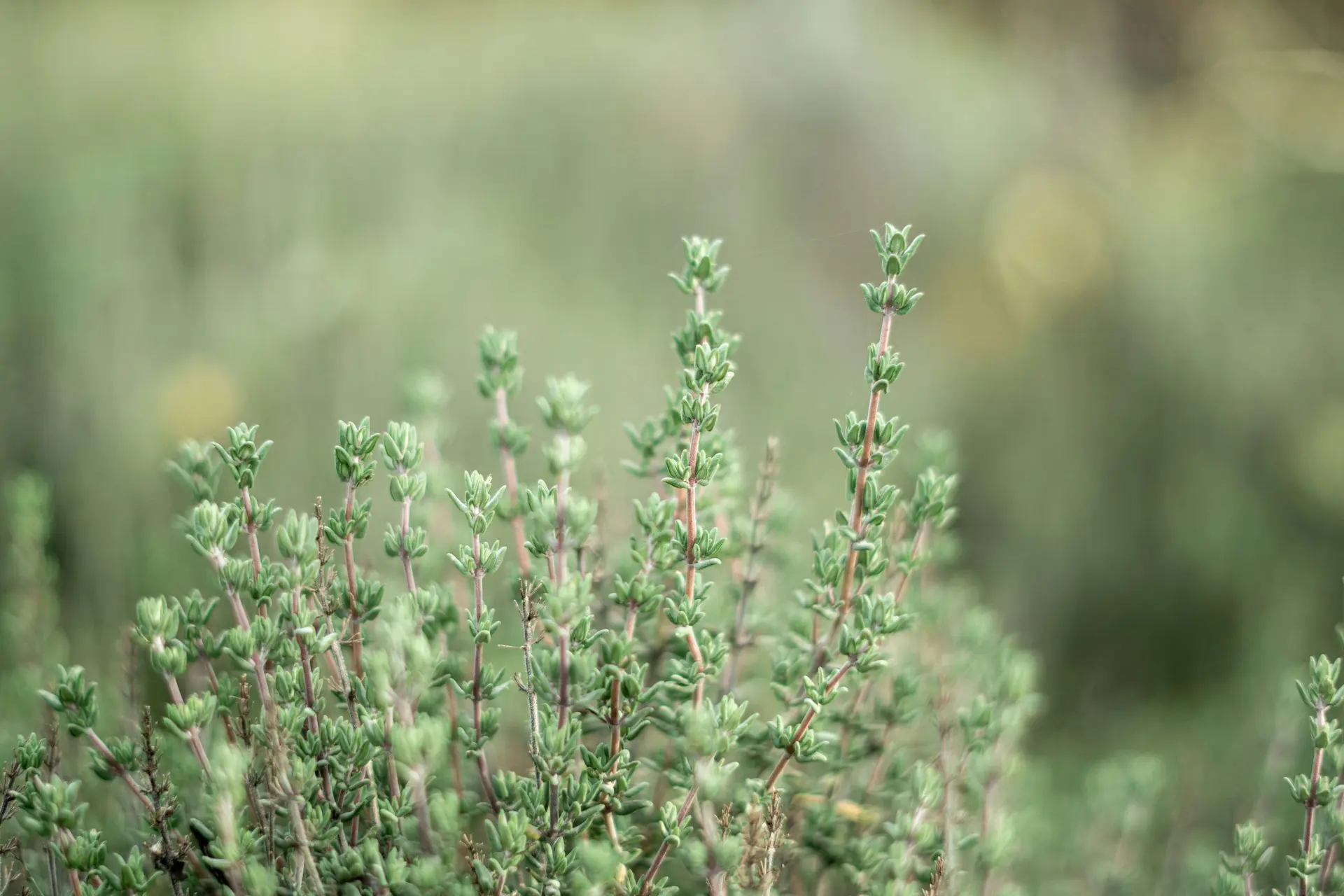
Thyme essential oil contains thymol, a phenolic compound with documented insect repellent and insecticidal properties. This herb releases most of its power once its volatile oils enter the air. A simple way to do that is to run a hand gently across the foliage before spending time outdoors, which crushes a few leaves and sends out a strong herbal smell that mosquitoes tend to avoid at close range.
In camping or small patio settings, dried thyme sprigs can be burned like incense. The smoke concentrates thyme-rich vapors in a limited radius, making this approach suitable for small gathering spots. Within an herb border, thyme forms a low, aromatic layer that can complement taller repellents such as lemongrass. Research on companion planting notes that rosemary and thyme reduce infestations from bugs and worms, protecting neighboring herbs from pest damage.
Neem has a long history in South Asian traditional medicine and agriculture, and its reputation as a bioinsecticide has since spread into many regions worldwide facing mosquito-borne diseases.
Its seeds and leaves contain azadirachtin and related limonoids, which act as insect growth regulators and feeding deterrents. The same Pathogens review highlights neem oil extracts with strong larvicidal and repellent activity against Aedes aegypti and other vectors.
Where climate allows, neem trees planted near homes and livestock shelters provide both shade and a background level of repellency as volatile compounds waft from foliage. For more concentrated use, cold-pressed neem oil can be blended into sprays and lotions at low percentages and applied to exposed skin. It can also be mixed into water-based emulsions used on exterior walls and vegetation.
Note that because neem oil has a penetrating scent and should not be ingested, it requires basic precautions in storage and application. These include clearly labeling containers and using them carefully around children and pets.
Garlic has sulfur-containing compounds that are unattractive to many insects. Allicin and related molecules form from crushed cloves, and laboratory assays have documented their mosquito repellent and larvicidal effects. In the home, planting garlic bulbs among vegetables and ornamentals creates a barrier that some pests avoid, reducing pressure from soil-dwelling worms and leaf-feeding insects.
For more direct mosquito management around plants, some gardeners prepare a simple garlic-water spray by blending cloves with water, straining the mixture and applying it to foliage during periods of high insect activity. The odor tends to fade after a day or two, so periodic reapplication is necessary.
Guava leaves contain caryophyllene and other terpenes linked to repellent and insecticidal properties. In tropical and subtropical regions where guava grows readily, households and small farms often use the leaves for more than compost. Collected prunings or fallen leaves can be dried and later burned in small piles, in clay stoves, or in metal braziers during dusk and early evening. The smoke forms a barrier that mosquitoes avoid.
Extracts from guava leaves also appear in experimental botanical repellent formulations. Because the active compounds are concentrated in the foliage rather than the ripe fruit, guava presents a useful combination for households.
Black pepper contains piperine, an alkaloid studied for its broad insecticidal and repellent activity. Around the home, black pepper vines are less common than thyme or lemongrass, yet play an important role in product development and agroforestry. In tropical farming systems, Piper vines grown on support trees continuously release aromatic compounds, which can make conditions less attractive to mosquitoes.
Makers of plant-based repellents use standardized piperine extracts as active agents and as synergists that boost the performance of other botanical compounds in a blend. Seeing piperine among the ingredients on product labels signals that the formulation draws on chemistry instead of relying only on generic “herbal” branding.
Conventional pesticides and insect repellent products contribute to a large global burden of poisoning and environmental contamination. Studies report an estimated 385 million cases of unintentional pesticide poisoning annually worldwide, with about 11,000 deaths linked to these exposures.
These numbers cover agricultural and household use, demonstrating why so many public health and environmental advocates encourage people to reserve synthetic materials for situations where there is a clear, high-risk need.
The use of plant-based repellents aligns with a broader shift toward integrated pest management strategies and low-toxicity controls. They often break down more quickly and connect back to deeply rooted cultural practices. Across continents, people have long burned leaves at dusk, grown aromatic shrubs, or rubbed crushed foliage on skin and clothing to keep biting insects away.
Using living plants supports this effort. Herb beds, container gardens, and mixed borders that include mosquito-repellent species can reduce insect pressure while contributing to the rise of nature-forward outdoor spaces.
Many plant-derived repellents match or even surpass synthetic products in immediate repellency during controlled tests. At the same time, their performance has practical limits. A study notes that these compounds often exhibit high volatility and physicochemical instability, which shortens protection time. Maintaining a reliable barrier requires frequent application or continuous diffusion.
Source control remains the most effective non-chemical strategy. Eliminating standing water in buckets, gutters and yard depressions removes breeding sites and reduces mosquito populations before they turn into biters.
Using plants that repel mosquitoes offers an accessible way to merge outdoor comfort with health and environmental priorities. The seven plant species mentioned all contribute science-backed tools for reducing bites in the home and open spaces. Combined with thoughtful planting and strategic source control strategies, households have practical options for enjoying the outdoors with more wildlife and fewer chemicals.