We are reader-supported. When you buy through links on our site, we may earn affiliate commission.
When you picture a forest fire, you likely imagine destructive flames consuming a lush, green ecosystem. However, not all fires are damaging — some are even essential. Believe it or not, the benefits of prescribed burns — controlled, intentional blazes — can beat the threat of catastrophic wildfire events and promote even healthier forest regrowth.
The Great Fire of 1910 was the largest wildfire in American history, burning 3 million acres of forest across Montana, Idaho and Washington. A prolonged drought and 80-mile-per-hour winds sent flames racing across tree canopies, as the U.S. Forest Service deployed 4,000 personnel to assist firefighters in putting out the flames.
The event leveled entire towns and killed dozens of people, with the U.S. Forest Service soon implementing a stringent policy of total fire suppression. Although the approach was well-intentioned, it resulted in a widespread accumulation of dead trees and dry underbrush.
Today, this legacy has met a warming planet, with hotter temperatures and drier conditions creating the perfect circumstances for massive, frequent wildfires to erupt. In fact, scientists have found that fire seasons now begin earlier in spring and end in late autumn.
The World Resources Institute verifies this claim, calculating that global forest fires burn over twice as much tree cover as they did 20 years ago. Between yesterday’s policies and the current state of climate change, catastrophic megafires are becoming the norm worldwide.
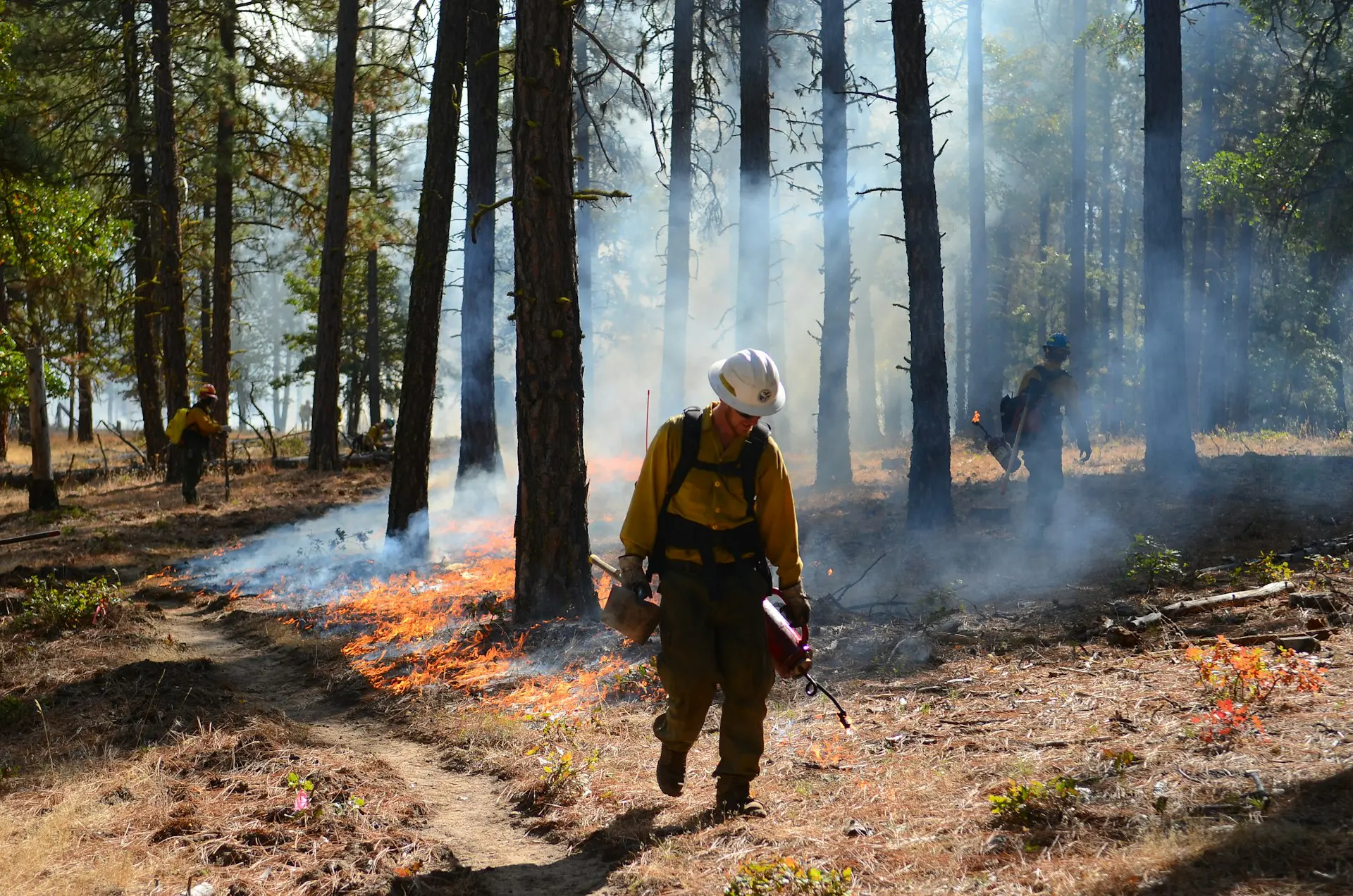
A prescribed burn is a planned burn in a specific area and is among the most crucial and cost-effective strategies for handling fires. Land managers must generate a fire management and prescribed burn plan — comprising public and staff safety measures, weather conditions, and the likelihood of meeting certain benchmarks — before initiating each project.
There are two types of controlled burning:
The “prescription” for a burn should entail the objectives, fuels, scope, environmental conditions, and suppression methods. The benefits of prescribed burns vary, but may include diversifying habitat, enabling the recovery of endangered species, or preventing future ruinous wildfires.
Controlled burns are the foundation of modern environmental protection. Parks often use this technique to mitigate overgrown vegetation, reduce hazardous fuels near developed areas, restore natural areas, and conduct research. In some respects, it serves as a preventive measure for cleaning the forest floor.
The process also promotes several ecological benefits. For instance, removing dead or dry overgrowth through burning and thinning reduces wildfire severity by 62% to 72%, whereas thinning alone is less effective. This also allows more sunlight to penetrate tree canopies, stimulating the growth of healthy native plants and creating more habitat and food resources for wildlife on the ground.
Western Montana Forest Restoration Director Mike Schaedel, from The Nature Conservancy, notes that many forest ecosystems depend on controlled fires. Ponderosa pine and western larch trees release seeds into the newly bare soil, facilitating successful germination and adaptation.
It also accelerates the decomposition of dead plant matter, releasing essential nutrients into the soil. Overall, controlled burns create more resilient ecosystems that can withstand future threats.
Land managers implement prescribed burns across the United States, but you’ll find it most often in places like California and Florida. These two case studies dig deeper into this crucial land management practice.
California is no stranger to wildfire outbreaks. In 2022, 11 wildfires were burning simultaneously, with dire implications for both nature and humanity. These fires followed a widespread 2018 fire in the state that killed 85 people.
With each fire, plant matter releases harmful carbon dioxide, nitrogen oxide and volatile organic compounds, lowering air quality in the surrounding areas. Animals must also migrate to escape their natural habitat — others aren’t so lucky and are unable to survive due to a lack of food and shelter.
A recent study shows that prescribed burns reduced fire severity by 16% in California in 2020, resulting in a 14% decrease in dangerous smoke particulates. A proposed strategy of burning 1 million acres annually has the potential to reduce smoke pollution by 655,000 tons over five years — equal to 52% of the state’s wildfire emissions from 2020.
The Florida Everglades is a fire-dependent ecosystem that requires fire for its health and vitality. For thousands of years, lightning strikes have ignited fires across the vast sawgrass prairies, clearing dead foliage and hindering the encroachment of hardwood trees. The Seminole and Miccosukee Indians also leveraged the benefits of prescribed burns for centuries.
The flames promote the growth of fire-adapted plants in South Florida, including slash pine, which relies on fire to remove competition. In one study, the National Park Service burned 13,000 hectares annually for 10 years in Big Cypress National Preserve. Even when the trees’ needles were scorched, very few trees died, demonstrating their remarkable resilience.
Other recent studies confirm that prescribed burns make Florida’s subtropical ecosystems more resilient and productive. Researchers used satellite imagery to show that Everglades pinelands bounced back 27% healthier than they were before a fire within two years.
The fire return interval — ideal burn frequency — varies by ecosystem. Some landscapes require more frequent controlled burning than others, which may only need to be done every few years. Other forests have a much longer natural cycle lasting decades.
The decision to conduct a prescribed burn is a highly collaborative effort among fire managers, ecologists and specialists from various land management agencies. These teams create detailed plans to specify goals and environmental conditions for a safe and effective fire.
You can learn about prescribed burns in your area by visiting your state’s official Department of Forestry website or your local fire department’s website. The U.S. Forest Service also puts out public notices. These agencies will also likely post about controlled burning on their social media accounts, so be sure to follow them for regular updates and information.
Although fires may seem detrimental to the environment, ecological restoration is among the many benefits of prescribed burns. As long as trusted officials carefully plan fires according to the needs of an ecosystem and weather conditions, this land management practice is key to preventing future wildfire destruction and harm.