How Much Do Agricultural Emissions Really Contribute to Climate Change?
We are reader-supported. When you buy through links on our site, we may earn affiliate commission.
Climate change conversations often focus on fossil fuels and pollution. Agriculture is often seen as a victim of climate change, with farms subject to droughts and floods. However, the reality is more nuanced. Food production depends on the climate, but it can also influence it in major ways.
The Short Answer: Agriculture’s Global Footprint
In 2022, global agrifood systems were responsible for roughly one-third of all human-caused greenhouse gas emissions, or 16.2 billion tons of carbon dioxide equivalent.
The U.S. agriculture industry is responsible for 10% of the country’s total emissions. This figure comes from the entire system, from clearing land to grow crops or graze animals, to raising livestock, transporting food, processing it and ultimately disposing of waste. Agriculture’s total footprint stretches from the farm to the dinner plate.
These percentages have evolved over time. In many developed countries, emissions from energy and transportation have grown faster, making agriculture appear relatively smaller. In lower-income and agrarian regions, agriculture remains a dominant source of emissions. Regional diets and farming practices all shape how large agriculture’s contribution is to the country’s emissions.
Deconstructing Agricultural Emissions
Agriculture emits three main greenhouse gases, each with distinct characteristics and climate impacts. They are part of why food production carries a high environmental cost.
Methane (CH4): The Livestock Factor
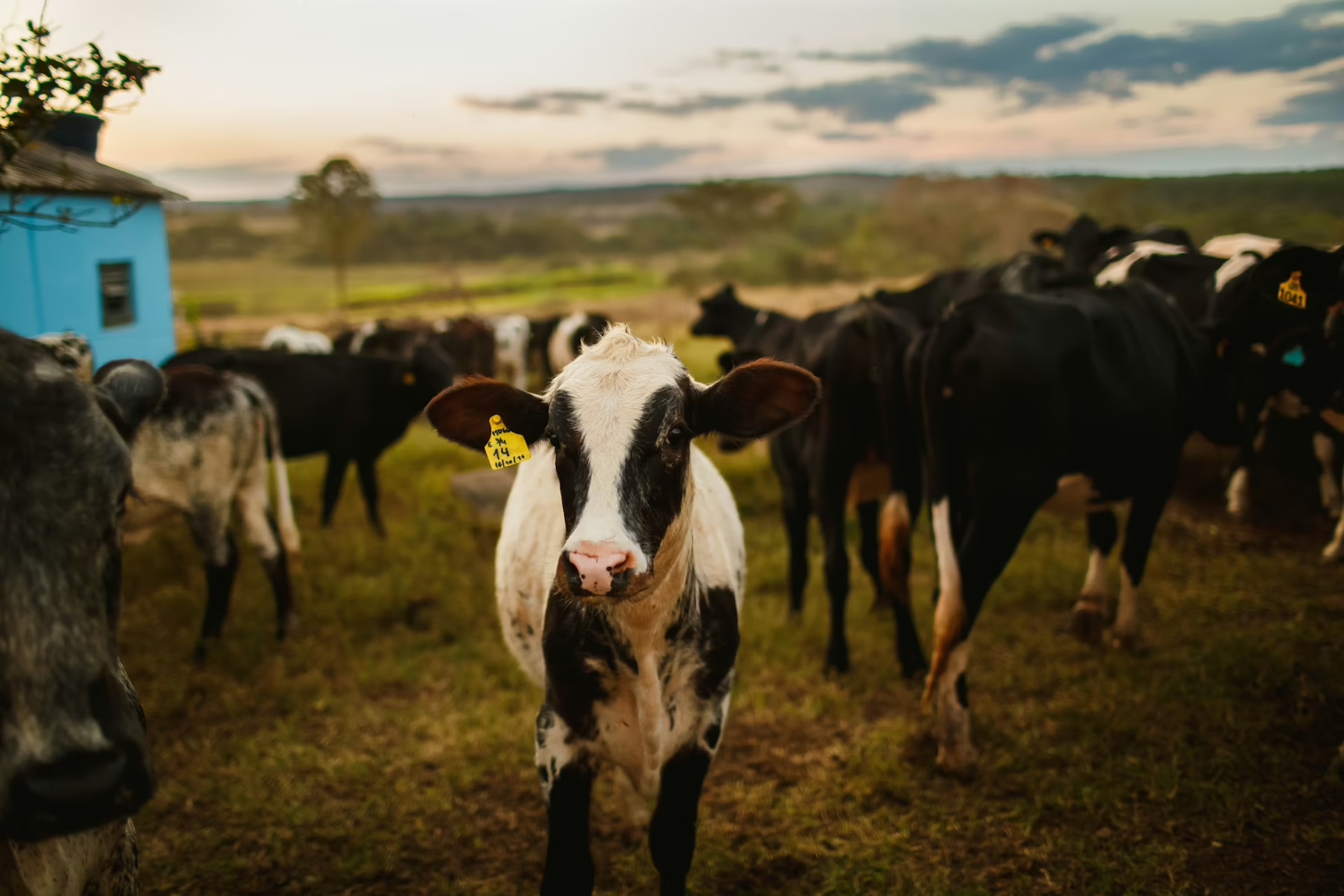
Even though methane persists in the atmosphere for a much shorter time than carbon dioxide, it can still trap heat effectively over its lifespan.
In agriculture, methane primarily comes from livestock, including sheep and cattle. These animals produce methane during digestion through a process called enteric fermentation. Manure management can also release methane.
Globally, livestock accounts for a substantial share of agricultural emissions, driven by high demand for meat and dairy. As diets shift toward more animal-based foods, methane emissions follow suit. This does not mean that livestock farming is inherently incompatible with climate goals, but it should be a significant talking point in policy discussions.
Nitrous Oxide (N2O): The Soil and Fertilizer Story
While a bit less well-known than carbon dioxide and methane, nitrous oxide is still a powerful greenhouse gas. It accounts for 6% of greenhouse gas emissions and can stay in the atmosphere for over a century.
Most agricultural nitrous oxide emissions come from soil management. When farmers apply synthetic and organic fertilizers to the fields, soil microbes convert some of the nitrogen into nitrous oxide, which then escapes into the atmosphere. The more fertilizer reaches the soil, and the less precise the management, the greater the emissions.
Fertilizers are essential for boosting global food production, but their misuse leads to both greenhouse gas emissions and pollution. For this reason, sustainable farming efforts should also focus on improving nitrogen efficiency.
Carbon Dioxide (CO2): Land Use and Machinery
Carbon dioxide emissions in agriculture are often indirect, but still relevant. One major source is land-use conversion, particularly in deforestation. Forests store large amounts of carbon, and when humans clear them for farms or pasture, that carbon goes into the atmosphere.
Agricultural machinery is also a significant source of carbon dioxide emissions. Tractors, irrigation pumps, processing facilities and long-distance shipping all rely heavily on fossil fuels. While these emissions may resemble those from other industries, they are still part of the food system and will grow with its expansion.
Charting the Course for Greener Agriculture
The complexity that makes agricultural emissions challenging to manage also creates room for solutions. Since emissions come from many sources, there are also several points where farmers and other sectors can enact change.
Sustainable and regenerative agriculture are promising approaches to the industry. Instead of focusing solely on reducing harm, these strategies aim to rebuild soil health and work with natural systems instead of against them. Policymakers, researchers and farmers are seeing value in these frameworks, especially in mitigating climate change.
Around the world, farms of various sizes are already experimenting with practices that lower emissions while maintaining or even improving productivity and resilience. What these farmers need is institutional and public support to continue their work.
Innovations Powering Sustainable Farming
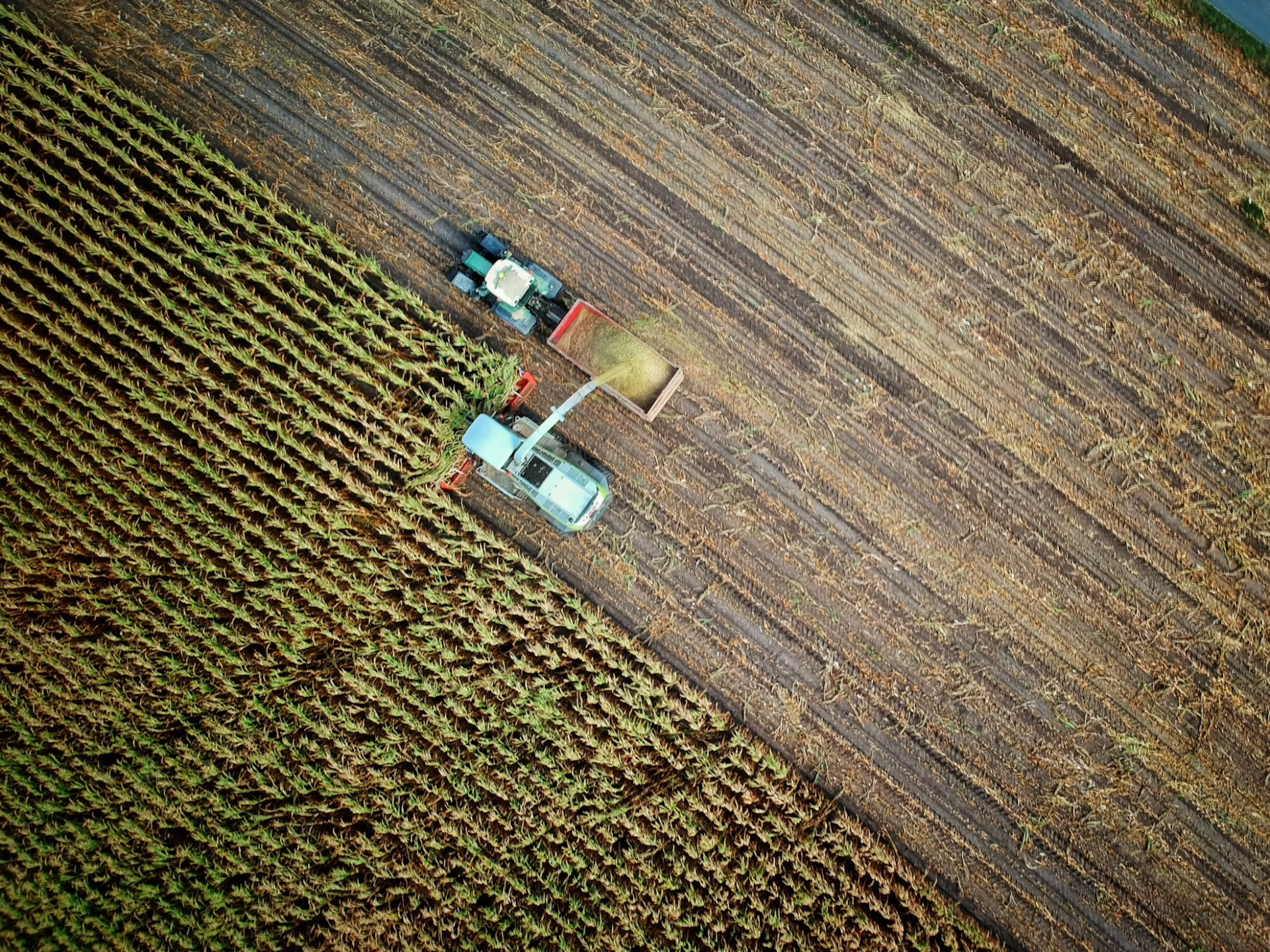
Progress in agricultural sustainability comes from combining traditional knowledge and modern innovation. Here are three areas that create a significant impact.
Smarter Soil Management
Healthy soils are one of agriculture’s most powerful contributions to climate change mitigation. Practices like no-till or reduced-till farming minimize soil disturbance, helping retain carbon that would otherwise float into the atmosphere. Cover-cropping, or the planting of crops during off-seasons, helps prevent erosion and adds organic matter back into the soil.
Aside from storing carbon, these regenerative techniques improve water retention and make farms more resilient to extreme weather. Over time, healthier soil can mean lower emissions and greater agricultural productivity.
A Circular Approach to Farming
Circular farming practices aim to turn waste into resources. One prominent example is using organic matter like animal manure and plant waste to create biofuel through anaerobic digestion. This process captures methane that would otherwise escape into the atmosphere and converts it into usable energy.
Other approaches include composting organic waste and integrating crops and livestock so that byproducts from one system support the other. Closing these loops allows farms to reduce emissions and rely less on external energy sources.
Precision Agriculture and Technology
Technology is transforming how farmers manage resources. GPS-guided tractors, IoT soil sensors, drones and satellite imagery allow for the precise application of water, fertilizer and pesticides. Instead of treating the entire field as a single unit, farmers can be more detailed and respond to area-specific needs.
This precision reduces waste and emissions tied to excess fertilizer use and fuel consumption. It also saves money, making sustainability more economically viable. The agricultural IoT market has already reached a value of $28.65 billion in 2024. As these tools become more accessible, more people will see them as practical climate solutions instead of optional upgrades.
The Role of the Conscious Consumer
While producers are central players in reducing agricultural emissions, consumers and their food choices also shape demand, which will influence how food is produced.
Supporting local and seasonal food can reduce emissions associated with long-distance transportation and cold storage. Reducing food waste is also an important effort. When people waste food, all the emissions tied to its production and transportation also go to waste.
These actions are most effective when seen as part of a bigger system. Farmers can adopt better practices and consumers can reinforce those efforts through purchasing decisions that value sustainability. More importantly, governments and lawmakers should create the systems and infrastructure that make these efforts easier and more accessible.
Shared Responsibility
Agricultural emissions account for a large share of global greenhouse gases, but these numbers are not fixed. They reflect choices about land use, technology, consumption and policies that can — and should — evolve over time. Addressing these emissions is a significant challenge, but there are opportunities on the horizon. How world governments and the agricultural industry respond will have a substantial impact on shaping a more sustainable future.
Share on
Like what you read? Join other Environment.co readers!
Get the latest updates on our planet by subscribing to the Environment.co newsletter!
About the author

Steve Russell
Steve is the Managing Editor of Environment.co and regularly contributes articles related to wildlife, biodiversity, and recycling. His passions include wildlife photography and bird watching.