What Is the Difference Between Dolphins and Porpoises?
We are reader-supported. When you buy through links on our site, we may earn affiliate commission.
Dolphins and porpoises are among the most familiar inhabitants of the world’s oceans and rivers, captivating observers with their sleek movements, curious behaviors, and remarkable intelligence. Because they share many similarities, these animals are often conflated in everyday conversation. Yet beneath the surface of their shared marine habitats lie important biological, behavioral, and ecological differences.
Toothed Whales of the Cetacean Order
Both dolphins and porpoises belong to the order Cetacea, a group of fully aquatic mammals that includes whales, dolphins, and porpoises. Within Cetacea, they fall under the suborder Odontoceti, known commonly as the toothed whales, because they have teeth rather than baleen plates used by other whales to filter food from water.
As mammals, both dolphins and porpoises breathe air using their lungs, are warm-blooded, nurse their young with milk, and have evolved adaptations that let them live their entire lives in water. All of these traits distinguish them from fish, which breathe through gills and do not nurse young. Although they share this evolutionary lineage, dolphins and porpoises are separate groups with distinct anatomical and behavioral traits.
Taxonomy and Species Diversity
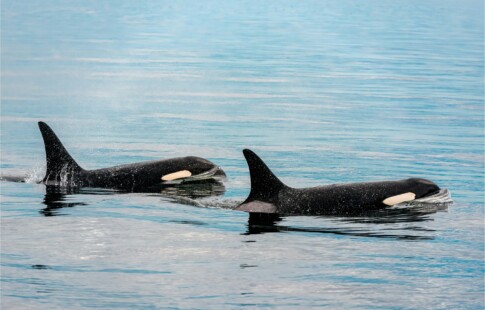
A key difference between the two groups lies in the number of species they include. Scientists recognize roughly 40 species of dolphins worldwide. This includes the killer whale, also known as the orca, which is actually the largest member of the dolphin family.
Porpoises, by contrast, are grouped in a much smaller family called Phocoenidae, consisting of only around seven confirmed species. This unequal diversity reflects different evolutionary histories and ecological niches occupied by the two groups across the globe’s oceans and, in some dolphin species, freshwater rivers.
Body Shape and Structures
One of the most noticeable differences between dolphins and porpoises lies in their morphology.
Snout and Head Shape
Dolphins typically have elongated snouts, often called “beaks,” which give their faces a tapered, streamlined appearance. Porpoises, in contrast, have shorter, more rounded heads without a pronounced beak.
The shape of the head also influences feeding behavior. Dolphins use their long beaks to probe into crevices and catch fish with precision, while porpoises rely on their compact heads and strong jaws to seize prey quickly in open water.
Body Form and Size
Dolphins generally exhibit a leaner, more streamlined body shape compared with porpoises, which tend to have more compact and robust bodies. This gives dolphins a sleek profile well adapted for fast, agile movement, while porpoises appear stockier by comparison.
In terms of size, dolphins are typically larger animals overall. Some species — notably the orca — reach a weight of more than 9,000 kilograms, whereas the smallest porpoise species, such as the vaquita, reaches only around 1.5 meters in width and 30-55 kilograms in weight.
Dorsal Fins
The shape of the dorsal fin or the fin on their backs is another distinguishing cue. Most dolphins have a curved or falcate dorsal fin, whereas porpoises usually have a smaller triangular dorsal fin that resembles a shark’s.
The size and placement of the dorsal fin can also signal age and species identity. In some dolphin species, a taller, more pronounced fin indicates maturity, while variations in shape help researchers distinguish between similar-looking species in the wild.
Teeth
Dentition offers one of the most reliable diagnostic tools for differentiation. Dolphins possess numerous conical teeth suited for grasping slippery prey such as fish and squid. Porpoises have flatter, spade-shaped teeth with broader surfaces.
Tooth structure also influences social interactions. Dolphins may use their conical teeth during gentle sparring or playful nipping within pods, whereas porpoises’ flatter teeth are primarily functional, reflecting their quieter, more solitary feeding habits.
Social Structure and Communication
The differences between dolphins and porpoises are not only physical. They extend into how these animals interact with each other and their environments.
Social Life
Dolphins are widely recognized for their complex social structures. They often live in large groups called pods that can include dozens or even hundreds of individuals. These social networks support cooperative hunting, care for young, and dynamic group communication.
Porpoises tend to form much smaller groups or may be seen alone or in pairs more frequently than dolphins. Their social life is generally more discreet and less visibly interactive from the outside.
Communication and Vocalization
Both dolphins and porpoises use sound to navigate their underwater world. This is a process called echolocation, where they produce sound waves and interpret the returning echoes to detect objects and prey.
However, dolphins also produce a rich repertoire of whistles, buzzes, and calls that support complex communication within their social networks. Porpoise vocalizations occur at very high frequencies that are often less audible to human observers.
Behavior Around Vessels
Dolphins are often playful and curious around boats, sometimes swimming alongside or riding bow waves — behavior that excites wildlife watchers and scientists alike. Porpoises generally keep a greater distance from human activity, offering more subtle sightings.
This difference in approach also affects the availability of observation opportunities. Dolphins’ willingness to interact with vessels makes them more visible to ecotourists and researchers, while porpoises’ cautious nature requires patience and specialized techniques to study their behavior in the wild.
Ecological Roles and Conservation Importance
Both dolphins and porpoises serve important roles at the top of their food chains. As apex or near-apex predators, they help regulate populations of fish and squid, contributing to healthy, balanced marine ecosystems.
However, population trends vary widely between species. For instance, the Amazon river dolphin, a freshwater species, has experienced a nearly 50% decline every decade, with similar reductions observed in pink dolphins in Asia. These declines illustrate that even within the dolphin family, some species are highly vulnerable to habitat degradation, pollution, and human activity, underscoring the need for targeted conservation efforts.
Their welfare also offers insight into the state of the environments they inhabit. Because these animals are sensitive to changes in water quality, noise pollution, and prey availability, scientists regard them as “sentinels” of ocean health — living indicators that reflect broader environmental shifts.
This ecological significance underpins strong legal protections. In the United States, for example, all dolphins and porpoises are safeguarded under the Marine Mammal Protection Act, and many species also receive protection under the Endangered Species Act, where populations are at risk.
Why These Differences Matter
Understanding the distinctions between dolphins and porpoises enhances how humans experience and protect oceans. These differences inform scientific research, guide conservation policy, and support responsible wildlife tourism and sustainable living practices. By approaching marine mammals with accuracy and respect, readers can better appreciate the diversity of life beneath the waves and the imperative to preserve it.
Each species, whether the acrobatic bottlenose dolphin or the quieter harbor porpoise, brings distinct value to the ecosystems they inhabit. Recognizing and celebrating these differences helps foster a deeper connection to our blue planet and informs efforts to ensure that future generations of people and marine life can thrive together.
Share on
Like what you read? Join other Environment.co readers!
Get the latest updates on our planet by subscribing to the Environment.co newsletter!
About the author

Jane Marsh
Starting from an early age, Jane Marsh loved all animals and became a budding environmentalist. Now, Jane works as the Editor-in-Chief of Environment.co where she covers topics related to climate policy, renewable energy, the food industry, and more.