We are reader-supported. When you buy through links on our site, we may earn affiliate commission.
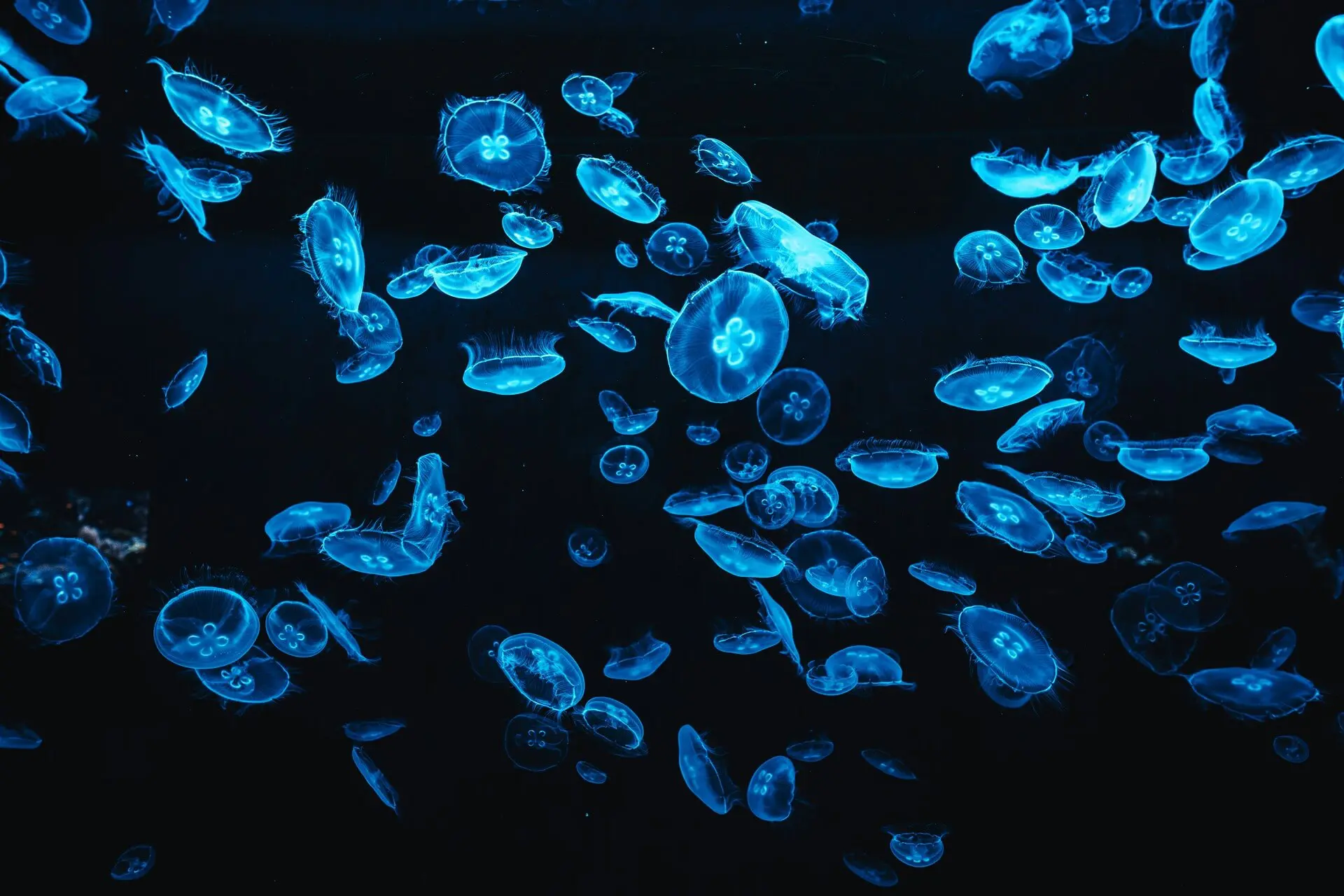
Imagine walking along a beach at night, and the shoreline sparkles with blue light with every wave — an effect that feels almost supernatural. This is bioluminescence — nature’s own light show created without electricity or heat, produced by living organisms themselves. Whether glowing in the depths of the ocean, flickering in forest clearings, or pulsing through coastal waters, bioluminescence is one of the most riveting natural phenomena on Earth.
Bioluminescence is the production and emission of light by a living organism, arising from chemical reactions within the organism. It is a type of chemiluminescence — a chemical process that yields visible light with minimal heat — sometimes called “cold light.”
Most commonly observed in marine settings, bioluminescence also occurs in insects such as fireflies, in certain fungi on forest floors, and in a handful of other terrestrial organisms. This diversity points to evolutionary routes that have developed bioluminescence independently many times across the tree of life.
At the heart of bioluminescence is a chemical light-producing reaction. Two key players are involved:
When luciferin reacts with oxygen in the presence of luciferase, it releases energy as visible light. Different organisms use specific variants of luciferin and luciferase, resulting in varied colors and glow intensities.
In some species, light is generated by symbiotic bacteria contained in specialized light organs rather than by the host’s own chemistry. This strategy, known as bacteriogenic luminescence, expands the evolutionary toolkit for producing light.
Bioluminescence is found across the globe, but it is most prevalent in the marine environment. Scientists estimate that up to 90% of animals in the open ocean’s pelagic zone — the water column away from the sea floor — are capable of bioluminescence.
In the depths of the ocean, sunlight fades into darkness, and bioluminescence becomes an essential form of illumination — far more common than sunlight itself. Even rivers, bays, and coastal surf can glow at night when tiny bioluminescent organisms are present.
On land, a few charismatic species show bioluminescence. Fireflies, also known as lightning bugs, use brief flashes of light to find mates on warm evenings, creating one of the most familiar experiences of natural bioluminescence on Earth.
Across species, bioluminescence serves multiple ecological roles. Researchers broadly group these functions into three categories — communication, hunting, and defense.
For many organisms, light is a language. In fireflies, specific flash patterns help males and females recognize compatible mates, synchronizing reproductive behavior under the cover of night. In the deep sea, where darkness obscures sight, pulses of light can signal social cues between members of a species and help maintain group cohesion.
Some predators have adapted mesmerizing bioluminescent lures that attract curious prey. The famous anglerfish, for instance, dangles a glowing “lure” near its mouth into the deep ocean’s blackness — drawing smaller animals toward their fate. Other species, such as certain crustaceans and fish, emit faint light that illuminates nearby water, helping them detect the movements of prey in otherwise pitch-black zones.
Light can also be a survival tool. Some organisms produce blinding flashes to startle predators, while others use light to camouflage themselves. Counterillumination happens when organisms match the brightness of the light above them, hiding their silhouettes from predators below. Certain squid release luminous clouds that confuse predators, similar to how ink clouds work for surface-dwelling cephalopods.
In water, most bioluminescent light appears in blue-green hues — wavelengths that travel farthest through the underwater environment. Many deep-sea animals have visual systems tuned to these colors, enhancing their ability to see bioluminescent signals. On land, bioluminescence may appear yellow or green, depending on the organism, as seen in fireflies and glow-in-the-dark fungi, which emit a softer, eerie glow.
Bioluminescence plays a role beyond individual organisms. In the open ocean, it can affect predator-prey interactions, shifts in species behavior, and the overall dynamics of marine food webs. Because many bioluminescent organisms are microscopic, their collective glow can serve as an indicator of ecological processes.
In some coastal regions, dramatic displays, such as glowing waves or phosphorescent bays, have become ecological icons. These events often result from bioluminescent plankton blooms, where vast numbers of microscopic organisms emit light when disturbed.
Among the world’s glowing shorelines, Mosquito Bay in Vieques, Puerto Rico, stands out as the brightest recorded bioluminescent bay, powered by exceptionally dense blooms of dinoflagellates. Its vivid nighttime glow reflects a combination of warm waters, limited shoreline disruption, and strong environmental protections. More than a visual marvel, the bay demonstrates how ecosystem stewardship directly influences the presence and intensity of living light.
Bioluminescence has long captured human imagination. Scientific evidence suggests its origins in animals date back more than half a billion years, meaning this light-producing ability emerged long before flowering plants and even before many modern animal groups diversified. Over evolutionary time, it developed independently across multiple lineages, shaping survival strategies in oceans, forests, and freshwater systems alike.
Today, researchers draw inspiration from nature’s living light to advance science and sustainability. One well-known example is green fluorescent protein (GFP), originally isolated from jellyfish and now widely used in biomedical research. GFP enables scientists to observe cellular processes in real time by acting as a biological marker that emits light under specific conditions, transforming the study of genetics, disease progression, and cellular development.
Nature’s light can serve as a powerful reminder of Earth’s complexity and resilience. Preserving environments where bioluminescent organisms thrive — from coastal waters to deep ocean basins — supports broader goals of biodiversity conservation and sustainable stewardship of natural resources. Healthy marine ecosystems, intact wetlands, and protected forests create the conditions that allow these species to flourish, reflecting the overall vitality of the habitats they illuminate.
Whether people observe glowing waves or the flicker of lightning bugs on a summer night, bioluminescence provides a remarkable connection between wildlife, ecosystems, and humans. It represents both a field of scientific exploration and a source of inspiration for nature-based innovation. Continued research into bioluminescent systems expands understanding of marine ecology, evolutionary biology, and environmental change, offering insights that inform conservation strategies and responsible resource management.