We are reader-supported. When you buy through links on our site, we may earn affiliate commission.
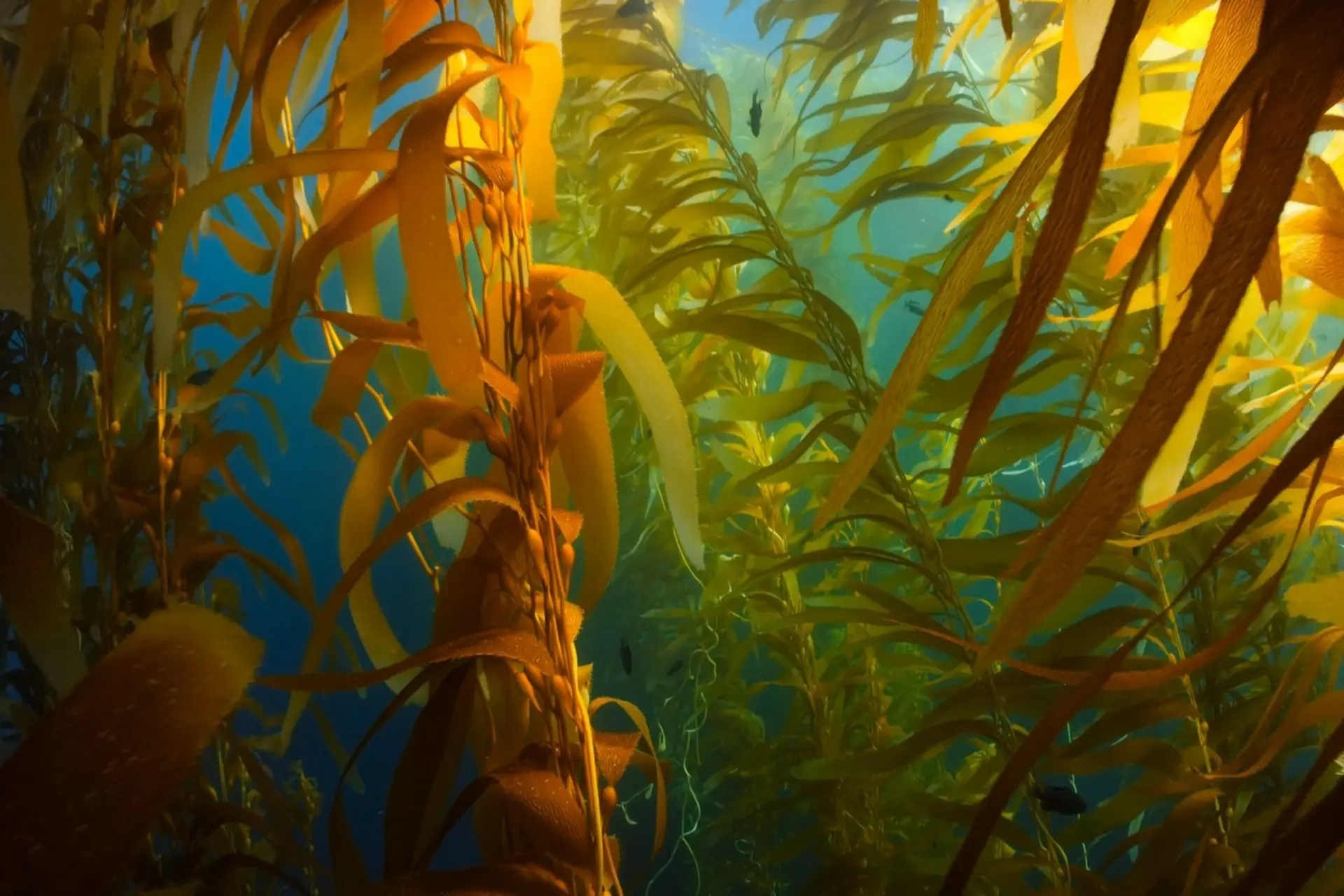
Beneath the ocean’s surface, kelp forests sway like undersea redwoods — fish dart through golden fronds while sea urchins graze and predators patrol. The kelp forest food web represents nature’s intricate balancing act, in which every species sustains the whole. When that balance tips, collapse unfolds with startling speed. What these underwater cities reveal offers profound lessons for humanity’s relationship with the natural world.
Kelp forests are more than underwater plants. As foundation species, they create entire ecosystems from the seafloor up, providing structure and habitat for countless organisms. These massive brown algae can reach over 150 feet tall, forming dense canopies that shelter fish, invertebrates, and marine mammals beneath their swaying fronds. Individual plants can grow up to two feet per day, making them among Earth’s fastest-growing organisms.
Scientists have identified 30 kelp species worldwide, each building diverse habitats across temperate and Arctic coastlines. From California to Tasmania and Japan to South Africa, these forests thrive in cold, nutrient-rich waters where sunlight penetrates the shallow ocean floor. A single healthy kelp forest can support over 1,000 species of fish, invertebrates, marine mammals, and seabirds.
Beyond biodiversity, kelp forests absorb dissolved carbon dioxide through photosynthesis, effectively removing it from the atmosphere at remarkable rates. Their dense structures also dampen wave energy, protecting shorelines from erosion during storms.
The kelp forest food web operates through interconnected relationships that span multiple trophic levels. As the primary producer, kelp converts sunlight into energy that flows through the entire system. Tiny organisms graze on kelp blades and drift, while larger herbivores devour the plant directly.
Purple sea urchins are among the most important primary consumers in this system. Under normal conditions, these spiny grazers keep kelp growth balanced by feeding on detached fronds and holdfasts as they creep across rocky substrates.
Sea stars, sea otters, and sunflower sea stars occupy the predator tier, hunting urchins and other herbivores. Secondary consumers such as rockfish and kelp bass feed on smaller invertebrates, while apex predators patrol the edges of the canopy.
Keystone species exert disproportionate influence on ecosystem structure relative to their abundance. Sea otters exemplify this role by consuming urchins as their primary food source, preventing overgrazing and allowing kelp forests to flourish. Remove the keystone, and the entire architecture collapses.
Throughout the Northeast Pacific, sunflower sea star populations declined between 80% and 100%, while Northern California lost over 90% of its kelp forest cover between 2014 and 2019. These staggering losses transformed vibrant underwater forests into barren zones within just five years, devastating fisheries and coastal ecosystems.
The collapse began in 2014 when a massive marine heat wave raised ocean temperatures along the West Coast. Warmer waters stressed kelp while fueling sea star wasting disease, a pathogen that caused infected animals to disintegrate within days. The outbreak decimated sunflower sea stars, voracious predators that once consumed dozens of urchins per week.
Without predators to control them, purple sea urchin populations exploded. Hungry urchins devoured kelp forests at unprecedented rates, creating vast urchin barrens where dense forests once thrived.
Kelp forests provide $465 to $562 billion annually through fisheries support and nitrogen removal services. Commercial and recreational fishing industries, in particular, depend on these ecosystems as nursery habitat for valuable species like rockfish, lingcod, and abalone. When kelp forests decline, fisheries collapse and coastal economies suffer widespread losses.
The kelp crisis mirrors broader environmental tipping points. Climate scientists warn that warm-water coral reefs face a 99% probability of tipping into degraded states under current warming trajectories, threatening ecosystems that support millions of species and generate billions in economic value.
Both crises stem from a resourcism mindset that prioritizes short-term extraction over long-term sustainability. The kelp collapse parallels deforestation on land for timber production, where removing keystone species triggers system-wide failure. Recognizing natural systems as integrated wholes makes the imperative for conservation clear.
These common questions address key concepts about kelp forest dynamics.
The kelp forest food web describes the interconnected feeding relationships within kelp ecosystems — kelp produces energy through photosynthesis, herbivores such as sea urchins consume kelp, and predators such as sea otters control herbivore populations to maintain balance. Decomposers break down drift fronds and dead organisms, recycling nutrients back into the system, creating a multi-layered structure where each level depends on the others for long-term stability.
Sea otters are keystone predators that primarily eat sea urchins. A single otter can consume up to 20% to 30% of its body weight daily, requiring constant foraging to meet energy demands. By controlling urchin populations, otters prevent overgrazing and allow kelp forests to flourish. Their presence maintains ecosystem balance, supporting hundreds of other species that depend on healthy kelp.
Kelp forests collapse when predator loss allows herbivore populations to explode. Warming waters, disease, and human impacts can drive the decline of keystone species such as sea otters and sunflower sea stars. Without predators, urchins multiply rapidly and devour kelp faster than it can regrow.
Pollution, sedimentation from coastal development, and overfishing of predatory species also contribute to ecosystem degradation. Once tipping points are crossed, recovery can take decades, even with active intervention.
Supporting marine protected areas, reducing carbon emissions, and advocating for ecosystem-based management all help save kelp forests, while restoration projects can reintroduce predators or remove excess urchins.
Individual actions such as reducing pollution and supporting sustainable fisheries also make a difference. People might consider participating in citizen science programs that monitor kelp health to provide valuable data for researchers. Likewise, volunteering with local initiatives or supporting organizations working on kelp conservation amplifies impact at the community level.
The kelp forest food web offers both a warning and a blueprint for our future. These systems demonstrate how quickly intricate ecosystems can collapse when essential species disappear, yet they also show the power of interconnected resilience. Moving forward requires viewing natural systems as integrated wholes rather than collections of resources to exploit.