We are reader-supported. When you buy through links on our site, we may earn affiliate commission.
The giant squid has long captured the human imagination, drifting between science and legend for centuries. Once believed to be the stuff of sea monsters and sailors’ tales, this elusive deep-sea creature is now a subject of serious scientific study. Yet one question continues to spark curiosity — just how big is a giant squid?
Understanding the size of a giant squid involves more than quoting a single number. It requires examining how scientists measure these animals, how they compare with other deep-sea giants, and what their size reveals about life in the ocean’s most mysterious regions.
The giant squid (Architeuthis dux) ranks among the largest invertebrates on Earth. Unlike animals with rigid skeletons, its soft body makes measurement a bit more complex. Scientists typically break its length into three main parts:
The mantle usually measures more than 2.25 meters (7.4 feet). The tentacles, which the squid uses to capture prey, can stretch much farther — sometimes doubling the creature’s total length.
When fully extended, a giant squid can reach lengths of up to 13 meters (43 feet). Some historical reports suggest even longer specimens, though these often rely on incomplete or stretched remains.
Weight provides another perspective. Adult giant squids can weigh between 200 and 280 kilograms (441 to 617 pounds), with females typically larger than males. This size difference reflects a broader pattern seen in many marine species.
To put the giant squid’s size into context, it helps to compare it with other large marine animals.
While it stretches longer than many whales in terms of total body length, much of that comes from its tentacles. Its mantle, which contains most vital organs, remains relatively compact compared to large vertebrates.
Still, the giant squid stands out among invertebrates. It holds the title of one of the longest known mollusks, a group that includes animals such as octopuses and clams.
A close relative, the colossal squid (Mesonychoteuthis hamiltoni), offers an interesting comparison. While generally shorter overall, the colossal squid has a bulkier body and can weigh more, sometimes exceeding 500 kilograms (1,102 pounds).
The size of the giant squid reflects the unique conditions of the deep ocean. Life at depths of 300 to 1,000 meters (980 to 3,280 feet) presents challenges that shape evolution in remarkable ways. These depths fall within what scientists often describe as the ocean’s “twilight” and “midnight” zones, where sunlight fades and eventually disappears entirely.
In these environments, animals rely on specialized adaptations to survive — making size an important advantage for conserving energy, detecting movement, and navigating vast, dark waters. Several key factors help explain why giant squids have evolved to grow to such remarkable sizes.
In the deep sea, food arrives unpredictably. Large size can support efficient energy storage and help animals travel longer distances in search of prey. A bigger body allows giant squids to store energy reserves that sustain them between infrequent feeding opportunities. It also enables them to take advantage of larger prey when it becomes available, maximizing each successful hunt.
Despite their size, giant squids face predators such as sperm whales. Growing larger may reduce vulnerability, especially during early life stages. Increased size can also make it more difficult for predators to subdue them, improving their chances of escape. In addition, their long tentacles and powerful movements provide defensive advantages when encountering threats.
Larger females can produce more eggs, increasing the chances of species survival. This helps explain why female giant squids often exceed males in size. A larger body size allows for greater reproductive output over time, which is especially valuable in environments where encounters between individuals are rare. This strategy supports population stability in the vast and sparsely populated deep ocean.
One reason giant squid size remains a topic of debate is that scientists rarely encounter them alive. Most specimens come from:
Each source presents limitations. Tentacles may stretch after death, or parts may be missing altogether. This makes precise measurement difficult.
In 2004, zoologist Tsunemi Kubodera and whale watcher Kyoichi Mori captured the first images of a live giant squid near the Ogasawara Islands. Using a baited camera lowered to about 900 meters, they photographed the animal and recovered a severed tentacle, which was later confirmed through genetic analysis. Remarkably, the tentacle continued to move and grip surfaces, revealing the squid’s strength.
In 2012, Kubodera returned with marine biologist Edith Widder and successfully filmed a live giant squid for the first time using a low-light deep-sea camera system. This breakthrough confirmed that earlier estimates of size fell within a realistic range, even if some extreme historical claims appeared exaggerated.
Part of what makes the giant squid feel even larger than it is comes from its distinctive anatomy.
Unlike its shorter arms, the squid’s two feeding tentacles can extend rapidly to capture prey. These tentacles end in specialized clubs lined with suckers, sometimes featuring tiny teeth for gripping. This design allows for a quick strike, helping the squid seize fast-moving prey in low-visibility conditions. Once captured, prey is drawn toward the arms and beak for consumption.
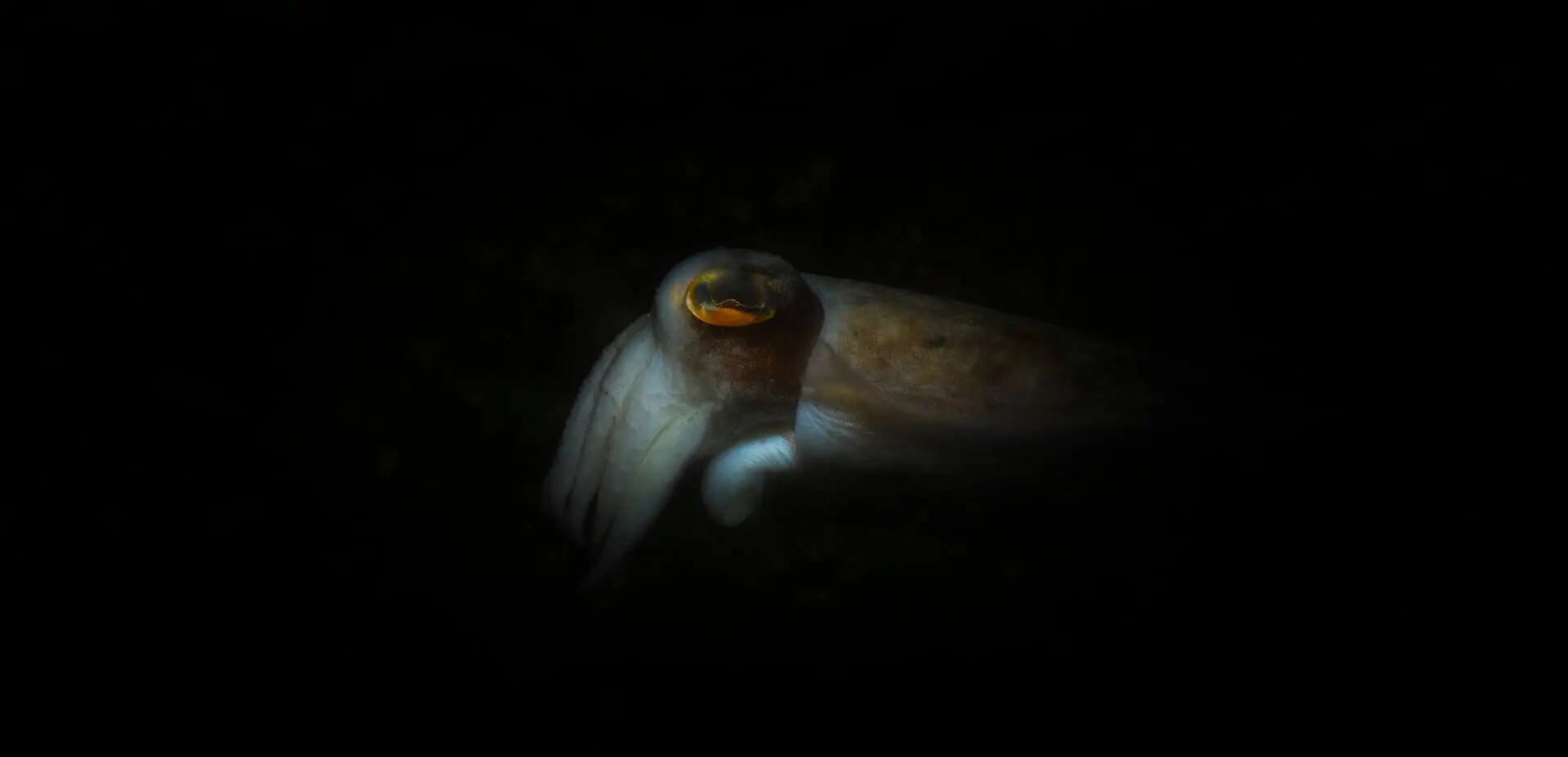
Giant squids have some of the largest eyes in the animal kingdom, reaching up to about 27 centimeters (10.6 inches) in diameter. Their eyes rank second only to those of the colossal squid, making them exceptionally well adapted to the dark depths of the ocean. This remarkable size allows them to detect faint light and movement, including large shapes such as predators like the sperm whale, from distances of over 120 meters (nearly 400 feet).
Their elongated bodies and flexible structure allow them to move efficiently through deep water, making the most of their size without excessive energy use. This streamlined form reduces drag, enabling smoother, more controlled movement in the high-pressure environment of the deep sea. It also supports energy conservation, which is essential when food sources are scarce.
Beyond curiosity, the size of giant squids offers clues about the health of marine ecosystems. As deep-sea predators, they play a role in maintaining balance within ocean food webs. Changes in their population or growth patterns may reflect shifts in:
Together, these factors make giant squids valuable indicators of broader environmental changes occurring deep beneath the ocean’s surface.
Despite advances in technology and exploration, the giant squid continues to hold on to an air of mystery. Each new encounter adds to scientific understanding while raising fresh questions. How large can they grow under ideal conditions? How long do they live? What role do they play in deep-sea ecosystems?
As research continues, the giant squid remains a reminder that Earth’s oceans still hold secrets waiting to be uncovered. And perhaps that is part of its enduring appeal — a creature both measurable and mysterious, immense yet elusive, living far below the surface in a world still largely unexplored.