We are reader-supported. When you buy through links on our site, we may earn affiliate commission.
Imagine seeing a woolly mammoth trudging across the Arctic tundra or hearing the call of a passenger pigeon echo through North American forests once again. For decades, these ideas belonged to science fiction novels and blockbuster movies. However, advances in genetics and biotechnology are making the concept of de-extinction a legitimate area of scientific research.
De-extinction is not a single technology but rather a combination of genetic, reproductive and ecological sciences. It aims to recreate or re-engineer close biological equivalents of past species by editing the DNA of their nearest living relatives.
In fact, in 2003, the Pyrenean ibex (Capra pyrenaica pyrenaica) became the first subspecies of any animal to be brought back from extinction. Although the animal only survived for a few minutes, the experiment successfully demonstrated the potential of de-extinction.Â
The foundation of every de-extinction project is DNA. Scientists begin by recovering genetic material from preserved specimens such as bones, teeth, frozen tissue, museum skins, feathers, or hair samples.
This process is far from straightforward because DNA breaks down over time. This leaves scientists with fragmented genetic material rather than a complete genetic blueprint. Researchers must piece together these fragments like a massive biological puzzle, with a complete set of an organism’s genetic information known as its genome. Sequencing the genome allows scientists to understand the traits that made the extinct species unique. Because ancient DNA is often incomplete, researchers compare it to the genomes of closely related living species to fill in gaps.
Once scientists understand an extinct species’ genome, they can begin modifying the DNA of a living relative through gene editing, a process that makes targeted changes to DNA. The most famous tool used today is CRISPR-Cas9, often described as a pair of molecular scissors. CRISPR allows researchers to cut specific DNA sequences and replace them with new genetic sequences.
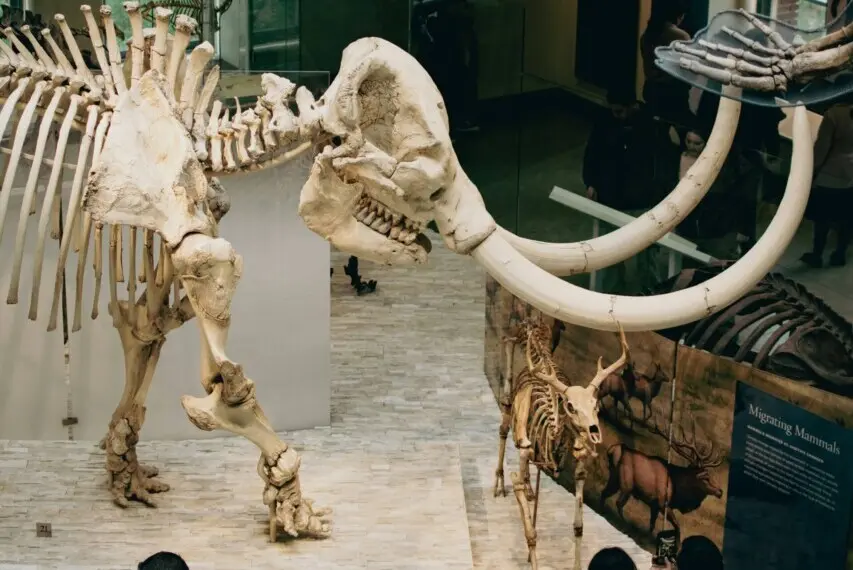
The precision of CRISPR has transformed biotechnology and made de-extinction efforts far more feasible than they were just a decade ago. For example, scientists studying woolly mammoths compare mammoth DNA to that of Asian elephants. By identifying genes responsible for thick fur, fat storage and cold tolerance, they can edit elephant cells to express mammoth-like characteristics.
Scientists are pursuing several pathways to de-extinction, including cloning via Somatic Cell Nuclear Transfer (SCNT). In this process, a nucleus from a donor cell is inserted into an egg cell whose nucleus has been removed, and then the embryo can be implanted into a surrogate mother.
Another strategy relies on genetic engineering. Rather than cloning an extinct species directly, researchers edit the genome of a close living relative to create an animal with similar traits.
Lastly, there is a method known as back-breeding, which selectively breeds living animals that retain ancestral characteristics. Over many generations, breeders aim to recreate animals that resemble extinct ancestors in appearance and behavior.
Supporters argue that de-extinction is about more than bringing back majestic animals for fun. They see it as a potential conservation tool capable of restoring ecological functions lost through extinction.
Many ecosystems evolved alongside species that no longer exist. When those species disappeared, so did many ecological processes. As such, the aim of de-extinction is to revive ecological roles that help maintain healthy, resilient ecosystems and support greater biodiversity. Rather than creating an exact replica of an extinct species, de-extinction often involves modifying a living species to perform similar ecological functions.
This idea forms the basis of rewilding, a conservation strategy that seeks to restore natural ecosystem functions. Proponents believe de-extinction could help reintroduce lost ecological roles such as grazing, seed dispersal, nutrient cycling and predator-prey regulation.
Some animals have a disproportionately large impact on their ecosystems. These organisms are known as keystone species because their presence helps maintain ecological balance.
If an extinct animal once shaped vegetation, controlled prey populations, or influenced nutrient cycles, restoring that role could benefit an entire ecosystem. As such, for many advocates, reviving extinct keystone species represents one of the strongest arguments in favor of de-extinction because a single species can influence hundreds of others.
One of the most intriguing arguments for de-extinction is its potential to mitigate climate change through ecosystem restoration. Healthy ecosystems act as natural climate regulators by storing carbon, supporting biodiversity and maintaining essential ecological processes. When species disappear, the ecosystems they helped shape can become less effective at performing these functions.
Restoration efforts aim to rebuild these natural systems by reestablishing ecological relationships and processes that have been disrupted over time. For example, large herbivores can shape landscapes through grazing, seed dispersal and nutrient cycling. In some ecosystems, these activities may promote the growth of plant communities that capture and store carbon more effectively.
While these ideas remain largely theoretical, they highlight the growing connection between biodiversity conservation and climate science. As researchers continue to study ecosystem restoration, de-extinction may offer new ways to strengthen natural systems that help regulate Earth’s climate.
Despite its promise, de-extinction raises substantial scientific, ecological and ethical concerns.
One of the most important realities of de-extinction is that most projects do not produce exact replicas of extinct species. Instead, scientists typically create proxy animals, living species that have been genetically modified to possess traits associated with their extinct relatives. A mammoth-like elephant, for example, would not be genetically identical to a true woolly mammoth.
Introducing any species into an ecosystem carries risk, as it could trigger unintended or unforeseen ecological consequences. A revived species could alter food webs, compete with existing wildlife, spread disease, or create entirely new ecological challenges. At the same time, modern ecosystems may be very different from the environments where extinct species once thrived. These concerns highlight the need for extensive testing, monitoring and risk assessment before any large-scale reintroduction occurs.
Beyond scientific risks, de-extinction also raises some ethical questions. There are over 1,300 endangered or threatened species in the U.S., so critics argue that resources devoted to reviving extinct species would be better spent protecting endangered animals that still exist. Others worry that de-extinction could create the perception that extinction is reversible, potentially reducing urgency around conservation.
While de-extinction remains an emerging field, several ambitious projects are already underway.
One of the most prominent de-extinction efforts today focuses on creating a mammoth-like animal adapted to Arctic environments. Rather than cloning a true woolly mammoth, scientists aim to engineer a modern species that carries key mammoth traits and could potentially restore lost ecological functions.
The project uses CRISPR gene-editing technology to modify Asian elephant cells to better adapt them to arctic environments, with the long-term goal of producing a cold-adapted elephant that could help reshape arctic landscapes, potentially supporting grassland restoration and influencing permafrost stability.
Researchers used DNA recovered from fossil remains to identify genetic traits associated with the dire wolf, then employed gene-editing technologies and used domestic dogs as surrogate mothers, bringing Romulus, Remus and Khaleesi into the world. The wolf pups carry several traits of the dire wolf, including slight differences in size, skull structure and muscle composition.
Additionally, the project sparked discussion throughout the scientific community, where supporters viewed it as a major technological milestone, while critics noted that the animals are best described as genetically modified gray wolves rather than true dire wolves.
De-extinction has moved far beyond the realm of science fiction. Advances in DNA analysis, genome sequencing, gene editing and reproductive technologies have transformed species revival from a theoretical concept into an active area of scientific research.
However, de-extinction should be viewed as one component of a broader conservation strategy, with protecting habitats, preserving biodiversity and preventing extinctions remaining the most effective ways to safeguard wildlife. Yet in the future, de-extinction could become a powerful tool for ecosystem restoration, biodiversity recovery and perhaps even help with climate change.