We are reader-supported. When you buy through links on our site, we may earn affiliate commission.
The Caribbean is a favored tourist destination, known for its postcard-esque beaches, turquoise ocean and exotic wildlife. Unfortunately, its pristine sands are littered wth a thick, brown tide called sargassum. Communities are restless in their fight against this ecological and public health crisis, as the floating seaweed suffocates the region’s coastlines.
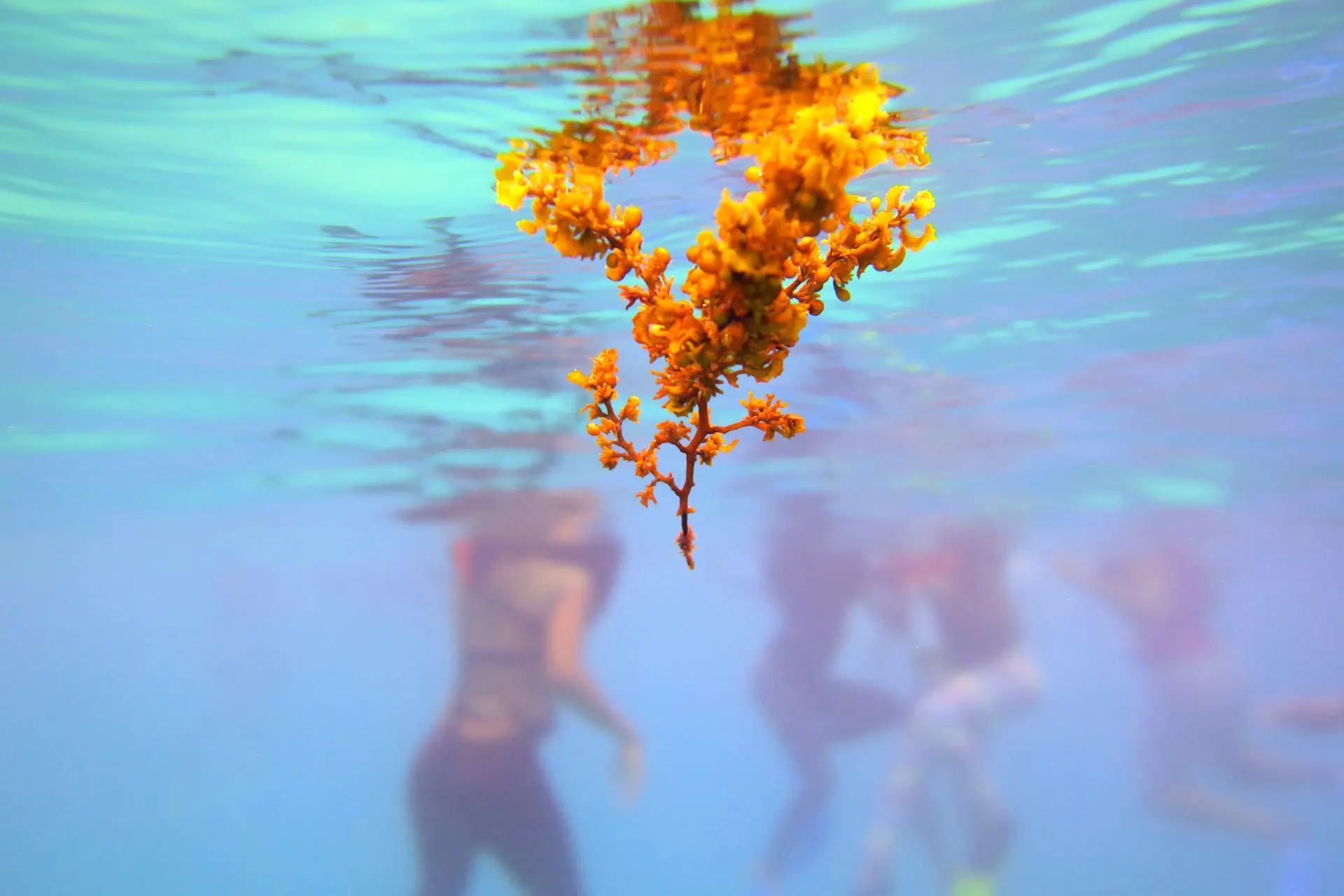
Sargassum is a type of free-floating brown algae characterized by its leafy appendages and berry-like structures. The “berries” are actually called pneumocysts and contain a gas that makes them buoyant. This allows them to form massive rafts.
Historically, the rafts offer food, shelter and breeding grounds for an array of marine species, including fish, turtles, crabs, shrimp and seabirds. Yet, the natural balance has changed in recent years with the mats expanding exponentially.
The seaweed now constitutes the Great Atlantic Sargassum Belt, which spans 5,000 miles between West Africa and the Gulf of Mexico. It’s the largest macro-algal bloom and has been inundating and creating an environmental crisis on Caribbean beaches since 2011.
Scientists attribute the sargassum surge to the formation of the Great Atlantic Sargassum Belt. In May 2025, it reached a new record of 37.5 million tons of floating algae. While researchers believe that nutrient runoff from the Amazon and other rivers was the primary cause, the latest scientific models paint a different picture.
Simulations suggest that ocean mixing is the main nutrient source driving its spread, not river discharge. Although river inputs contribute to it, researchers in one study found that removing deep-ocean mixing led to the blooms disappearing entirely.
Additionally, shifts in oceanography are fueling its growth. There is an ocean current anomaly that allows rogue seaweed to escape the Sargasso Sea, forming the trans-Atlantic belt that bombards Caribbean coastlines.
Although sargassum is a natural phenomenon, its recent influx has had severe impacts on the environment and public health. The volume of this biomass is overwhelming and choking coastal ecosystems, while also posing a risk to human well-being and the tourism industry.
Sargassum wreaks havoc on the environment as soon as it reaches land. The thick, weighty mats create a barrier that devastates coastal wildlife. The piles are especially damaging during turtle nesting seasons, which can occur from June to December in places like Curaçao.
In Antigua, excessive sargassum rafts washed ashore and prevented the gravid hawksbill sea turtles from reaching their nesting habitat. This resulted in a 25% reduction in suitable nesting areas, threatening the species’ future population.
The effects are just as dire underwater. When sargassum decomposes, it clouds the column and prevents light penetration by 28 to 31 times compared to pre-event levels — an occurrence that transpired in Mexico’s Puerto Morelos reef lagoon in 2015.
Decomposition also depletes oxygen concentrations and triggers anoxic conditions. Areas like mangrove forests, bays and inlets that have endured this have witnessed massive die-offs of fish, corals, crustaceans and echinoderms.
Caribbean communities and visitors are also affected by sargassum. The most dire threat comes about 48 hours after washing ashore, when its decomposition releases hydrogen sulfide gas and ammonia. People who get too close may experience respiratory problems, skin irritation and neurocognitive symptoms. Higher exposures could also result in breathing difficulty, confusion, nausea and vomiting, and elevated blood pressure.
These health hazards create a particularly frustrating economic fallout for tourism-dependent islands. Tourists don’t want to visit a beach littered with harmful, foul-smelling seaweed mats, and often choose to cancel their bookings. As a result, local businesses suffer from declining revenue.
Communities across the Caribbean have responded to the sargassum crisis with a multifaceted defense. The large-scale initiatives primarily focus on managing the formation and spread, while governments and coastal managers use advanced satellite imagery to predict and monitor the arrival of rafts. This also allowed the involved parties to create a protective barrier around critical tourist hot spots and fragile marine habitats, preventing sargassum from ever reaching the shore.
In addition to removal efforts, scientists and entrepreneurs are repurposing the biomass into sustainable products. One initiative is converting it into biofuel for clean energy, while other Caribbean communities are processing it into nutrient-rich agricultural biofertilizer. Sargassum’s properties enhance nutrient uptake, leading to higher yields and healthier crops.
These ingenious efforts are fostering new, resilient economies in a “circular” model as much as they are cleaning up the region’s renowned, white-sand beaches.
Sargassum is, in fact, a type of seaweed species. You might think of it similarly to oak or cypress being part of the broader tree category.
Sargassum has what many call a “rotten egg” smell as it decomposes. When bacteria break down, they release hydrogen sulfide and other gases with a particularly smelly odor.
It’s possible that the sargassum crisis won’t go away anytime soon. As long as rising ocean temperatures and ongoing nutrient runoff from rivers continue, you can expect massive blooms to occur throughout the Caribbean.
Don’t cancel your summer Caribbean travel plans just yet. Many of the islands have implemented effective management programs to mitigate the spread and effects of Sargassum. It would be wise to check the most recent reports for your destination, especially since sargassum landings are usually seasonal and localized.
While fresh sargassum in the water is unlikely to harm you, it’s best to avoid making contact with decaying piles on the beach. These usually hide jellyfish and other organisms within the mats and may cause skin irritation.
Although the sargassum crisis in the Caribbean is overwhelming, individual actions can still empower positive change. Supporting regional resorts, businesses and nonprofits in their initiatives to repurpose sargassum helps foster sustainable management practices. Reducing your own contribution to nutrient pollution also prevents massive algal blooms that occur thousands of miles away.