We are reader-supported. When you buy through links on our site, we may earn affiliate commission.
Climate science often introduces terms that sound alarming but feel unclear or vague. For example, someone might hear about climate tipping points in news headlines or policy debates and wonder, what are they, and why do they matter?
As such, it is time to break the concept down in plain language. Instead of technical jargon, this guide will focus on clear questions that help demystify the idea of climate tipping points. Making it feel less abstract and more like a set of real, understandable processes shaping the planet.
A helpful way to imagine a tipping point is to picture a canoe. As someone slowly leans to one side, nothing dramatic happens at first, but at a certain point, a slight extra shift sends the canoe flipping.
A climate tipping point works in a similar way. It is a critical threshold in the Earth’s climate system that, once crossed, can trigger large, accelerating and irreversible changes. Before the tipping point is reached, the system may appear stable, but afterward, it can move into a dramatically different state with little chance of returning to its previous condition.
The concept of climate tipping points changes how climate risk is understood. Rather than a smooth curve of worsening impacts as temperatures rise, tipping points suggest the possibility of sudden leaps into new and more drastic climate realities. This matters for three key reasons:
For policymakers and climate advocates, climate tipping points shift the conversation from maintaining acceptable warming levels to avoiding crossing thresholds that lock in long-term damage.
In fact, scientists warn that several parts of the Earth’s system may be approaching these thresholds. The world is nearing the edge of what is thought to be a safe zone as climate change worsens.
Scientists have identified several potential tipping elements in the Earth system. While uncertainty remains about exact thresholds, their existence is widely accepted in climate science.
The melting of Greenland’s ice sheet has far-reaching consequences for global climate stability and human well-being, which is its contribution to global sea level rise. It contains enough frozen water to raise global sea levels by about 7 meters if fully melted, and warming temperatures are already accelerating ice loss.
Once melting reaches a critical threshold, the process can become self-sustaining and form a feedback loop of warming temperature leading to more melted ice, which also leads to even warmer temperatures.
The Amazon rainforest plays a very important role in regulating global carbon cycles by absorbing vast amounts of CO2 and producing oxygen for us to breathe; that is why it is often referred to as the lungs of the world. However, deforestation combined with rising temperatures and changing rainfall patterns could push it toward the irreversible tipping point of turning into a savanna or savanna-like environment.
The temperature at which the Amazon is likely to tip from rainforest to savanna is between 2°C and 6°C. This would not only release massive amounts of stored carbon but also reduce the forest’s ability to generate rainfall, reinforcing its decline. Such a shift would have global consequences, from biodiversity loss to altered weather patterns far beyond South America.
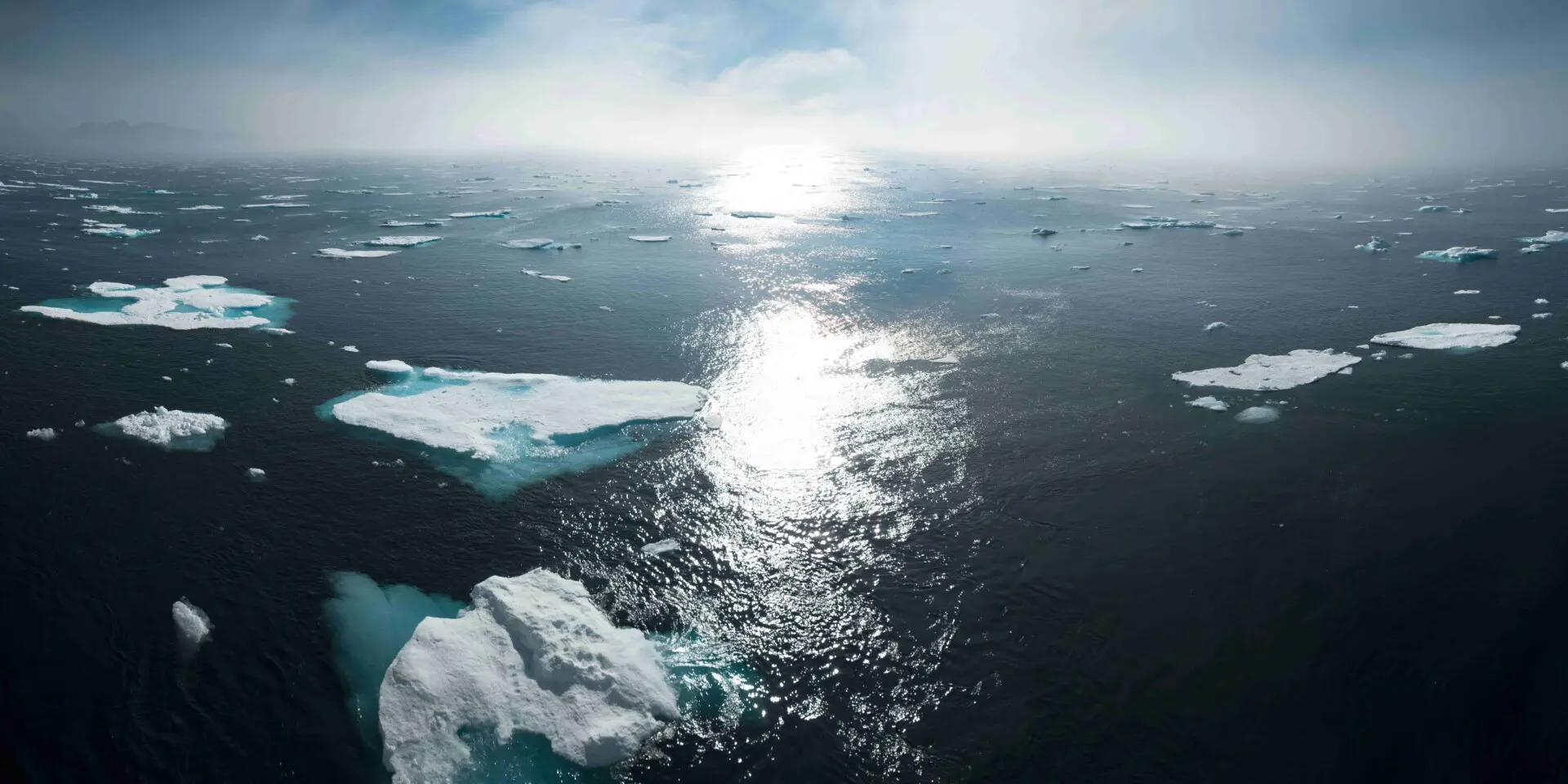
Permafrost regions in the Arctic contain large amounts of frozen organic carbon. As temperatures rise, permafrost thaws, allowing microbes to break down organic matter and release carbon dioxide and methane. This creates a feedback loop of warming that causes thawing, which releases greenhouse gases, which in turn cause more warming. In fact, two-thirds of Arctic Sea ice has melted since 1958, when it was first measured.
Earth’s oceans contain powerful circulation systems that move heat around the planet. For example, the Atlantic Meridional Overturning Circulation (AMOC) drives warm surface water northward and sends cold, deep waters southward. This process delivers heat and nutrients to colder northern regions and sends carbon into the deep ocean
However, the AMOC is slowing due to rapidly rising Arctic air temperatures driven by climate change, and scientists have warned that it could eventually become so weak that they no longer transport heat around the globe. This tipping point could disrupt weather patterns across Europe, Africa and the Americas, potentially shifting rainfall patterns and intensifying global climate instability.
Climate tipping points are especially concerning because they do not operate in isolation. Changes in one system can increase stress on another, creating a cascading chain reaction across the planet. For example, melting ice sheets contribute to rising sea levels and can also influence ocean salinity, which in turn may affect large-scale circulation systems like the AMOC.
While the idea of tipping points can sound alarming, it also includes an important counterbalance, which are positive tipping points. These occur when solutions begin to spread rapidly and reinforce themselves.
For example, as renewable energy becomes cheaper and more widely adopted, it can accelerate further investment and deployment. In fact, renewable energy is essentially accessible to every country in the world and about 29% of today’s electricity is powered by it
Similarly, there are efforts to lessen carbon emissions and even reach carbon-negative solutions. For example, Microsoft has committed to an ambitious climate goal of becoming carbon negative by 2030 and removing its entire historical carbon footprint by 2050.
Climate tipping points can feel overwhelming, but they don’t represent a fixed outcome. The Earth system remains stable and operational, with what happens next depending on the choices made now and in the years ahead.
Everyone is part of that system through the decisions people support, the habits that are adopted and the voices that are amplified. Just as climate risks can accelerate, solutions can scale quickly when enough momentum builds, through clean energy, ecosystem restoration and stronger climate policies.
The answer does not have to be perfect to make a difference, but what matters is a clear direction. The more people understand how these systems work, the better equipped they are to support actions that keep the planet stable and resilient.