We are reader-supported. When you buy through links on our site, we may earn affiliate commission.
Along the stretches of South Australia’s coastline, a toxic algal bloom has left a trail of lifeless marine creatures on the sand. Among the casualties are sea dragons, some of the ocean’s most visually striking fish. As dead specimens continue to wash ashore, marine ecologists are grappling with a once-distant possibility that these animals may not survive a rapidly warming ocean.
Since March 2025, a harmful algal bloom dominated by the dinoflagellate Karenia mikimotoi has swept across more than 4,500 kilometers of Australia’s southern coastline. The South Australian government described it as one of the worst bloom events in the country’s recorded history and declared a natural disaster in July 2025.
Algal blooms happen when cyanobacteria, also known as blue-green bacteria, feed on excess nitrogen and phosphorus in nutrient-rich dead zones. The overgrowth depletes oxygen in the water and blocks sunlight from reaching the seabed, which can stunt underwater plant growth or kill vegetation entirely.
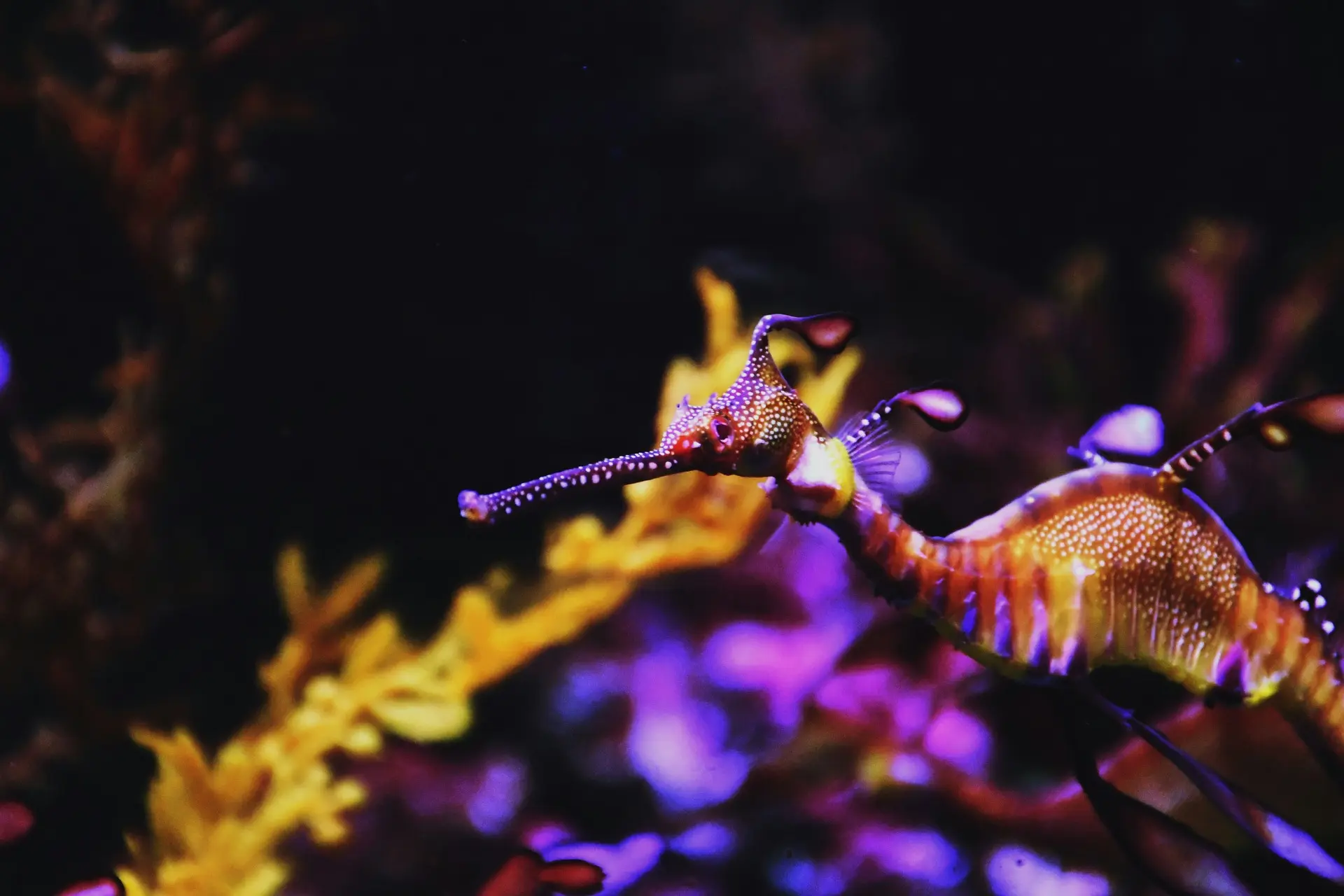
This particular bloom has killed roughly 34,000 sea creatures across approximately 190 bony fish species. Sharks, dolphins, stingrays, and octopuses are among the dead. But the leafy sea dragon and its weedy relative have drawn the loudest alarm from researchers.
Marine ecologists at the University of Technology Sydney have reportedly been receiving hundreds of dead specimens by mail from citizen scientists who collect carcasses on beaches up and down the coast. The IUCN Seahorse, Pipefish and Seadragon Specialist Group has called it the largest recorded mass mortality of both species.
The South Australian government pointed to an ocean heat wave as the probable underlying cause. Warmer-than-average sea and air temperatures, combined with calm and clear conditions, created the right environment for toxic algae to multiply.
Sea dragons carry biological baggage that makes a crisis like this one particularly lethal. Their anatomy and behavior leave almost no margin for survival when toxic algae move through their habitat.
Sea dragons breathe through unusually small gill pores. When toxic algae like K. mikimotoi saturate the water column, those tiny openings become clogged or damaged. The algae interfere with oxygen exchange at the gill surface, suffocating the animal even in water that still holds dissolved oxygen. For a fish that depends on precise, unobstructed gill function to breathe, even a moderate bloom concentration can be fatal.
Unlike many marine species that relocate when conditions deteriorate, sea dragons display strong site fidelity. They tend to stay within a small home range for their entire adult lives, often no more than 50 to 500 meters from where they were born. When a bloom drifts into their territory, they stay put.
Even if sea dragons were inclined to flee, their bodies would not cooperate. They are among the slowest-swimming fish in Australian waters, relying on tiny transparent fins on their necks and tails to drift through kelp beds and seagrass meadows. A fast-moving bloom can engulf their entire territory well before they get anywhere.
Climate-related pressures on sea dragons have been building for years, and the 2025 bloom sits at the end of a worsening trend. In April 2022, more than 200 dead weedy sea dragon carcasses washed ashore on Sydney beaches between the Central Coast and Wollongong.
Scientists attributed the strandings to a series of intense East Coast Low storms combined with a marine heat wave. The extreme weather generated 14-meter waves and eight times the normal rainfall, creating underwater pressure changes that the animals could not withstand.
Populations around Sydney have still not bounced back, even years later. Dive sites in Botany Bay that once supported seven to eight sea dragons per outing now turn up two to three. The decline has persisted despite the absence of any new major weather event in the region.
The leafy sea dragon has been listed as Near Threatened on the IUCN Red List since 2006, and Australian law fully protects the species. In May 2025, the IUCN reclassified the weedy sea dragon from Least Concern to Vulnerable, drawing in part on citizen science data. Both listings point to a group of animals that was already declining before this bloom began.
Researchers identified range-wide population estimates as the single most pressing knowledge gap. Without baseline data on how many sea dragons exist and where they live, measuring the true toll of an event like the 2025 bloom is close to impossible.
Citizen science programs generate data from coastlines that professional scientists cannot regularly monitor. Machine learning algorithms now analyze diver-submitted photographs to identify individual sea dragons by their unique markings. At the same time, advanced habitat mapping reveals which kelp forests and seagrass meadows matter most to their survival.
The ruby sea dragon is a reminder of how much remains unknown. Scientists at Scripps Institution of Oceanography identified it as a new species in 2015, and divers first filmed it alive in 2016. It inhabits depths of 50 meters or more and lacks the leaf-like appendages of the leafy sea dragon. Video footage suggests it may possess a prehensile tail not found in either of its relatives. It eluded detection for over a century, and the IUCN still classifies it as Data Deficient.
Sea dragons are not extinct, but the 2025 bloom dealt a devastating blow to already fragile populations. Ocean temperatures continue to climb and extreme weather events are growing more frequent. The window for effective intervention is narrowing, and whether these animals persist will depend on how quickly conservation science and climate policy can respond to an ocean that is changing faster than anyone expected.