We are reader-supported. When you buy through links on our site, we may earn affiliate commission.
Beneath the ocean’s surface exists a world invisible to the naked eye, yet responsible for sustaining nearly every form of life on the planet. Ocean phytoplankton form the foundation of marine ecosystems and regulate Earth’s climate in ways most people never consider. Without them, the planet’s atmosphere, food chains, and carbon cycles would collapse.
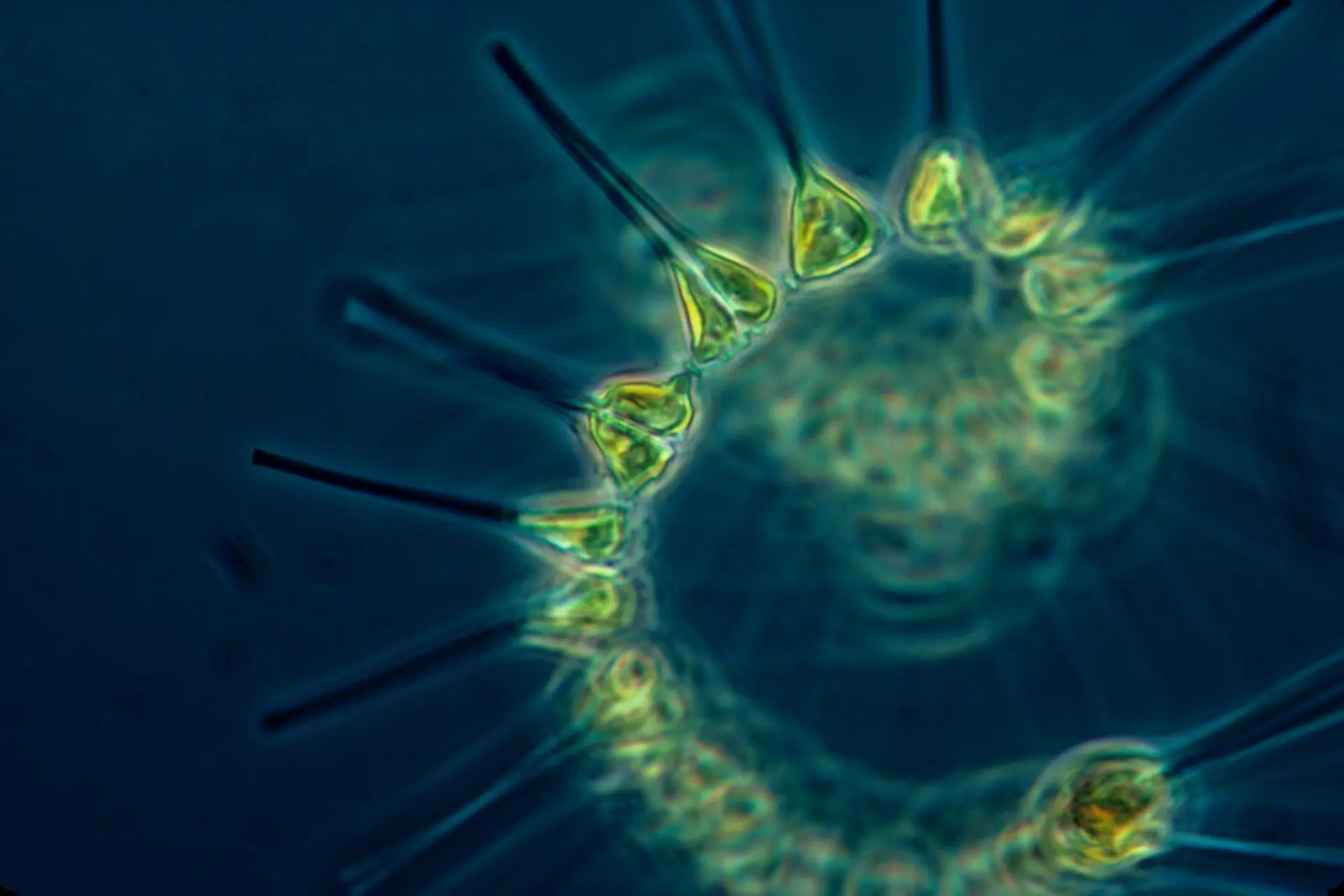
A single drop of seawater can contain thousands of individual phytoplankton cells, each one a powerhouse of photosynthesis. These organisms are so small that most measure less than the width of a human hair. Yet, when billions upon billions of them work together across the world’s oceans, they become a force that shapes the entire planet.
Ocean phytoplankton function as the base of the marine food web, supporting everything from zooplankton to massive whales. They form blooms that can stretch for hundreds of miles, visible even from space. Their influence extends far beyond the water, touching the air people breathe and the climate patterns that govern weather systems worldwide.
The role phytoplankton play in producing oxygen rivals that of Earth’s forests. While land-based trees and plants are celebrated for their atmospheric contributions, one species produces 20% of oxygen in the entire biosphere. Prochlorococcus is so small that scientists didn’t even discover it until 1988, yet it may be the most abundant photosynthetic organism on Earth.
In total, ocean phytoplankton are responsible for nearly half of the biosphere’s net primary productivity. Every breath a person takes is traceable to these tiny organisms floating in the ocean. Their photosynthetic activity also consumes vast quantities of carbon dioxide (CO2), making them critical regulators of atmospheric composition.
The biological carbon pump represents one of nature’s most elegant climate solutions. When phytoplankton photosynthesize at the ocean’s surface, they capture CO2 from the atmosphere and convert it into organic matter. As these organisms die, they sink into the deep sea, where they help sequester carbon in the long term.
This mechanism accounts for about 90% of the CO2 storage gradient from the atmosphere to the deep ocean. Just days to weeks separate the moment carbon enters a phytoplankton cell at the water’s surface from its arrival in the deep sea. Without this pump continuously moving carbon from the atmosphere into the ocean depths, atmospheric CO2 levels would be significantly higher than they are today.
While phytoplankton have maintained oceanic balance for millions of years, human activities now threaten their stability. Among the major threats are nutrient runoff into coastal waters and climate-driven changes in ocean conditions.
Phytoplankton require nutrients such as nitrogen and phosphorus to grow, but modern agriculture and industry have created a dangerous excess of these nutrients. Runoff from fertilized fields and wastewater discharge have led to surplus accumulation in coastal ecosystems, triggering eutrophication — a process in which phytoplankton populations explode beyond sustainable levels.
These blooms often include harmful algal species that produce toxins deadly to fish, marine mammals, and even humans. When the blooms die off, their decomposed state consumes oxygen, creating dead zones where most marine life cannot survive. Such harmful events have occurred in waters from the Gulf of Mexico to the Great Lakes.
Climate change poses a more insidious threat through its effects on ocean structure and chemistry. Rising sea surface temperatures intensify ocean stratification, creating stable layers that prevent nutrient-rich deep water from mixing upward. Research examining contentious global trends in phytoplankton biomass suggests a century-long decline may be underway, driven largely by warming.
As stratification intensifies, upper layers become depleted of the nutrients phytoplankton need to thrive. Ship-based measurements and early satellite observations support the possibility of this long-term reduction. If phytoplankton populations continue to shrink, the consequences could cascade through marine food webs and alter the ocean’s capacity to regulate atmospheric carbon.
Scientists and conservationists are developing innovative strategies to safeguard ocean phytoplankton populations despite these mounting challenges. The solutions span from cutting-edge technology to ecosystem-based approaches rooted in natural processes.
Advanced monitoring systems are transforming how scientists track phytoplankton health and predict harmful blooms. Researchers developing visual monitoring platforms use high-throughput imaging and flow cytometry, combined with deep learning algorithms, to automatically identify species and life-cycle stages. This technology allows for rapid, accurate detection of harmful algal blooms before they cause widespread damage.
Artificial intelligence (AI) has further proven particularly valuable in analyzing vast amounts of oceanographic data. These systems can recognize patterns that indicate when and where blooms are likely to occur, giving coastal communities precious time to prepare. The integration of satellite imagery with AI-powered analysis creates an early warning system that operates continuously across entire ocean basins.
Agricultural practices and land management strategies must change to prevent nutrient pollution at its source. For instance, when farmers reduce fertilizer application, they minimize the amount of applied nutrients and lower the risk that excess nutrients will wash into waterways during rain events. Precision agriculture techniques can deliver nutrients only where and when crops need them.
Ecosystems offer powerful solutions, as well. Wetlands, especially, act as filters, trapping sediments and absorbing nutrients before water reaches the ocean. Recent research has demonstrated that using wetlands as nutrient sinks in farm management strategies is effective. Restoring and preserving these buffer zones delivers long-term benefits while supporting biodiversity and wildlife habitat.
Coastal ecosystem restoration offers the most sustainable pathway to improving ocean water quality. Mangrove forests’ dense, intricate root systems filter nitrates, phosphates, and other pollutants, creating barriers between land and sea. These forests trap sediment and remove contaminants before they can reach open water.
Beyond their filtering capacity, mangroves provide critical habitat for fish and shellfish, shield coastlines from storm surge, and sequester carbon at rates higher than most terrestrial forests. Restoration projects around the world have demonstrated that rebuilding these ecosystems delivers multiple benefits simultaneously. The mangroves become self-sustaining, continuing to improve water quality for decades without human intervention.
Phytoplankton raises questions for people curious about ocean health and climate science. Here are answers to the most common ones.
Phytoplankton are microscopic, single-celled organisms that drift freely in the water column and are incapable of swimming against currents. Seaweed is a type of large, multicellular algae that grows to macroscopic sizes and typically anchors itself to rocks or other surfaces on the ocean floor.
Individual phytoplankton cells remain invisible to the naked eye. However, when they multiply into massive blooms, they cover hundreds of square kilometers of ocean surface. These blooms often change the water’s color to bright green, turquoise, or reddish brown, depending on the species involved. Satellites equipped with specialized sensors easily detect and photograph these events from orbit.
While most phytoplankton species play beneficial roles in marine ecosystems, some form harmful algal blooms that produce toxins or deplete oxygen when they die and decompose. These events can kill fish, poison shellfish, and threaten human health. The problem became serious enough that the Inter Agency Working Group was established through federal legislation to coordinate research and response efforts.
Ocean phytoplankton form the foundation of marine food webs and regulate atmospheric composition on a planetary scale. Their vulnerability to human activity and climate change makes protecting them urgent. Technology, sustainable land use, and ecosystem restoration offer pathways to safeguard these organisms and the ocean systems on which everyone depends.