We are reader-supported. When you buy through links on our site, we may earn affiliate commission.
Light pollution has been recognized as a significant problem since the 1970s, leading to wasted resources and various effects on humanity, wildlife, and the environment. As decades pass, scientists are discovering more about light pollution and discovering how its ecological impacts can influence individual experiences. A recent study is now exploring the link between light pollution and Alzheimer’s disease.
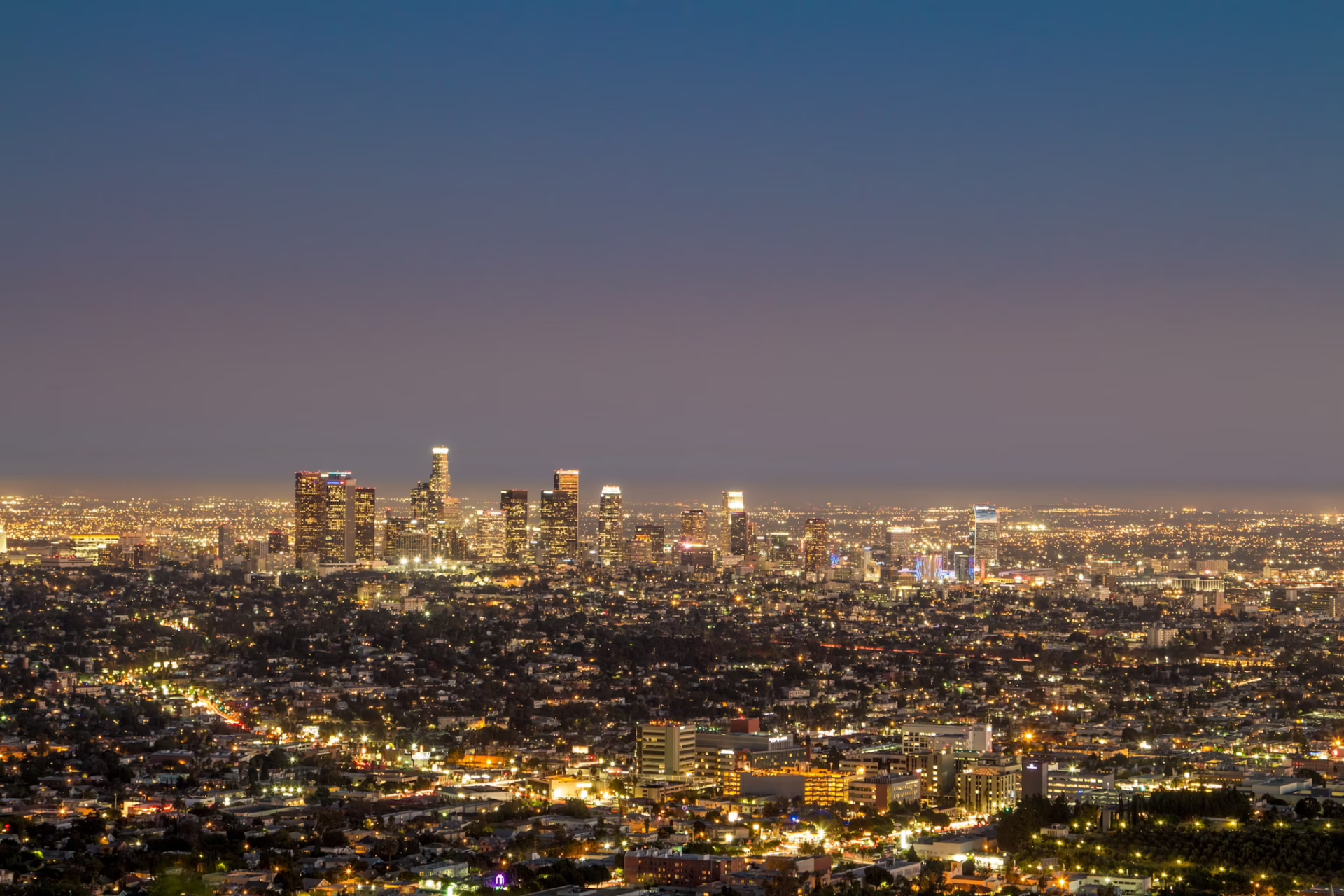
Light pollution refers to the presence of excess artificial light, especially outdoors. Instead of physical litter or chemical pollutants, artificial light “leaks” into the surrounding environment, causing excessive brightness, discomfort, and visual disturbances. In many cases, it can even overpower the night sky — urban residents might be unable to see the stars or enjoy natural light at night.
While light might not be a traditional pollutant, its effects are tangible. It affects wildlife and ecosystems and consumes excess amounts of energy. Recent research has also shown its harmful impact on human health.
A recent study has revealed an association between exposure to artificial light at night and the development of Alzheimer’s disease, especially for individuals under 65.
The U.S.-based researchers examined nighttime light intensity across all states, averaging the data from 2012 to 2018. They then compared this information to the prevalence of Alzheimer’s disease in the country, finding notable correlations. The higher the nighttime light intensity in a specific area, the more Alzheimer’s cases there are.
The researchers also examined the link between other health conditions and Alzheimer’s. Diabetes, stroke, atrial fibrillation, hyperlipidemia, and hypertension had stronger associations with Alzheimer’s than nighttime light intensity.
On the other hand, nighttime light intensity correlates more strongly with Alzheimer’s disease than alcohol abuse, obesity, chronic kidney disease, depression, and heart failure in the general population.
However, this distribution looks different for people under 65 — for this age group, nighttime light exposure had stronger ties to Alzheimer’s disease than all other examined conditions.
This analysis shows possible connections between light pollution and Alzheimer’s. However, further studies are still necessary to investigate the nature and the actual cause of these observations.

The underlying cause of these correlations might not be clear, but some scientists do see how nighttime light might lead to Alzheimer’s — it’s all about sleep quality.
Outside of Alzheimer’s, light pollution also poses dangers to human health. Many artificial lights lean more toward the blue light spectrum, like the sun’s natural rays. The body then responds by suppressing melatonin production, affecting its circadian rhythm and making it harder to fall asleep.
Poor sleep quality can lead to more serious problems in the long term. Studies show that sleep deficiency has links to oxidative stress, β-amyloid protein deposition, and neuroinflammation — conditions that can increase the risk of Alzheimer’s disease. It also reduces the number of synapses in the central nervous system, a significant risk factor for the disease.
A recent literature review also revealed that 45% of people experiencing cognitive impairment have experienced sleep disturbances before the onset of their symptoms.
The effects of blue light on the circadian rhythm and a person’s sleep quality could form part of the link between light pollution and Alzheimer’s.
A lot of artificial light sources emit blue light, which is similar to natural sunlight. Blue light can be harmless in the daytime when it is plentiful. However, exposure to it at night, especially through light pollution, can come with harmful health effects.
Devices such as computers, smartphones, and tablets are common sources of artificial blue light exposure.
While small amounts of blue light might not directly harm one’s vision, using these devices for long periods can lead to eye strain. People blink less when using these devices, resulting in symptoms such as blurred vision, headaches, and neck pain. Long-term exposure to blue light can also contribute to macular degeneration or the worsening of one’s central vision.
Blue light is not all bad. Blue light therapy is a common treatment for seasonal affective disorder (SAD). It simulates natural sunlight and helps people manage depressive symptoms due to seasonal changes.
However, exposure to artificial blue light at night can have the opposite effect. A recent animal experiment found that nighttime blue light exposure can cause aggression, depression, and anxiety-like symptoms.
Light pollution is a widespread issue, and solving it will require institutional support. However, individual light use is also crucial in minimizing its effects. These strategies can help households and office spaces manage light usage to reduce light pollution.
Each light fixture should have a purpose. Instead of randomly placing lights, consider existing fixtures and how they might interact. For example, if a space already has a large overhead light, it wouldn’t be wise or practical to use another equally large and bright fixture next to it. Instead, smaller accents or task lights might be better to support the purpose of the space.
Aside from ensuring that the space remains usable, it’s also important to consider potential impacts on surrounding wildlife, especially when lighting outdoor areas.
Light pollution occurs when ambient light from artificial bulbs floods the sky. A simple yet effective fix is to use fixtures with shielding or aiming capabilities that direct light down and prevent rays from going upward and outward.
Aside from minimizing light pollution, shields and shades focus the light on areas that need it most, minimizing energy waste.
Most households and business establishments don’t need to keep the lights on at all hours of the day. Setting timers for light bulbs is an excellent way to still benefit from artificial light without polluting the surroundings. It’s also useful in residential areas where bright lights might disturb other people’s sleep.
Motion sensors are another type of lighting control that people can use to save energy and money and minimize light pollution. As the name suggests, motion sensor lights only turn on when they sense movement. Like timers, they automatically turn off when they are not needed.
Aside from being energy and economically efficient, motion sensors can effectively deter intruders. A home could start off completely dark, and when someone walks up to it, they get a burst of bright light.
Nighttime can be dark, but most people don’t need bright outdoor lights on a daily basis. Homeowners and businesses should consider how much illumination they need at night and try to get by on lower levels of brightness. It’s best to keep lights dim when possible and be mindful of surfaces to ensure light doesn’t reflect back into the sky.
The growing body of research linking light pollution to health risks highlights a critical public issue. Light pollution affects several parts of life on earth. While more evidence is always welcome, the concerns around this human-caused issue require immediate attention.