We are reader-supported. When you buy through links on our site, we may earn affiliate commission.
The word “desert” conjures images of endless dunes and scorching emptiness, but this oversimplified view ignores a profound reality. Desert ecosystems are among the planet’s most dynamic and biologically diverse environments, supporting intricate webs of life that have evolved ingenious strategies for survival. Far from barren wastelands, these parched landscapes pulse with resilience, creativity and interdependence that rival any rainforest or coral reef.
The notion that deserts consist solely of scorching sand, perpetual heat and lifeless voids misses the mark entirely. Commanding a staggering footprint that spans one-fifth of Earth’s land area, drylands appear on every continent and shape the lives of roughly 1 billion people. Despite receiving no more than 25 centimeters of precipitation annually and facing evaporation rates that often exceed rainfall, these territories sustain a remarkable variety.
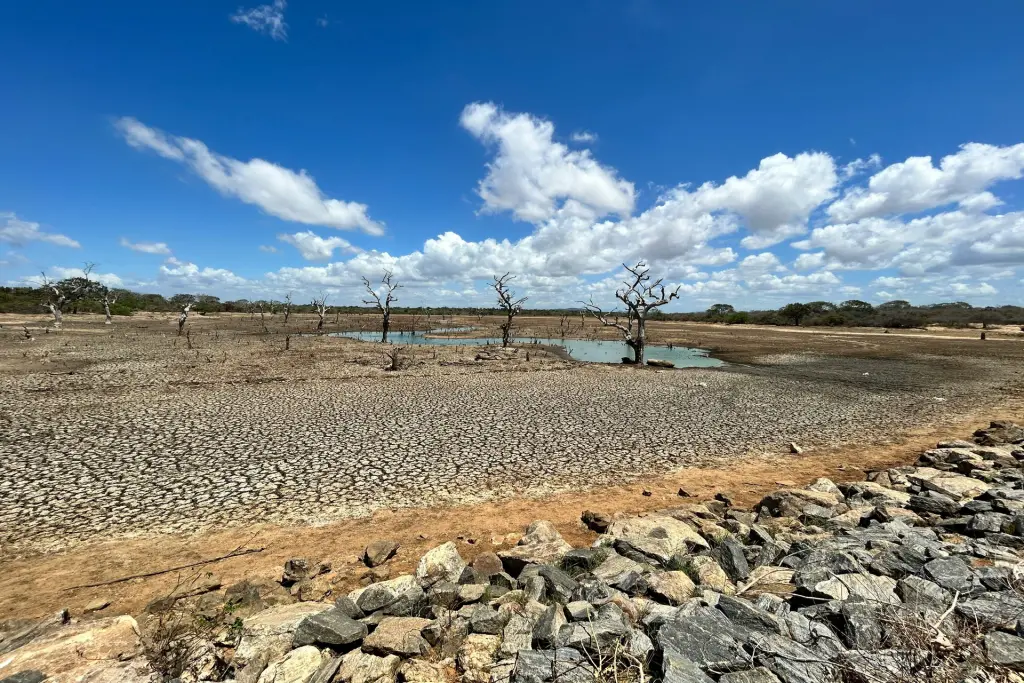
From rocky plateaus to salt flats to shrublands dotted with vegetation, desert ecosystems encompass landscapes where communities build livelihoods in conditions that demand constant adaptation.
Plant life has developed extraordinary mechanisms to thrive despite scarce moisture. Securing and conserving hydration in landscapes that may not see rainfall for months requires specialized strategies.
Functioning as sophisticated hydration networks, root structures in dry habitats reach far below the surface to tap reserves invisible from above. Over time, several plants that adapted to desert life have developed specialized features that maximize access while minimizing loss.
Certain vegetation transforms into living reservoirs that sustain opportunistic herbivores during harsh conditions. While camels typically graze on fiber-rich diets of twigs, leaves and dry grasses, scarcity forces them to become tactical cactus consumers when standing reserves vanish.
During these periods, prickly pear cacti emerge as critical food sources because they store up to 95% of water in thick fleshy pads. Such storage capacity makes these botanicals essential survival tools for wildlife navigating extended droughts, illustrating how flora and fauna have co-evolved through interdependence.
Far higher than most people imagine, animal populations in parched territories create complex food webs and ecological relationships. From tiny insects to large mammals, creatures have carved out niches that contribute to habitat health in surprising ways.
While predators typically receive credit for population control rather than plant propagation, research reveals a different story. Possessing the potential to function as secondary seed dispersal agents, western diamondback rattlesnakes challenge conventional understanding of predator contributions.
After exposure to snake digestive processes, seeds remain viable and achieve remarkable results when planted alongside snake waste, demonstrating 40.07% higher germination than control samples. By highlighting how carnivores inadvertently support plant populations, this discovery addresses ecosystem resilience during a global seed dispersal crisis.
The Sahara demonstrates the biodiversity potential of settings commonly dismissed as lifeless. Within this iconic expanse, which is home to 70 mammal species including wild dogs, Barbary sheep, Dorcas gazelles and the critically endangered Northwest Africa Cheetah, reptile diversity matches mammal richness with 100 organisms ranging from crocodiles to countless lizard varieties.
Adding another dimension to Saharan biodiversity, 90 bird varieties inhabit the territory and range from diminutive finches to imposing ostriches. Smaller creatures like ants and scorpions complete the picture while playing integral roles in nutrient cycling, soil aeration and prey provision.
Desertification poses the most serious threat to these delicate living networks, occurring when human activity causes widespread degradation that gradually strips drylands of soil fertility. Because this process unfolds slowly, crop yields often collapse before nearby populations recognize the damage. Farmers struggle to understand why harvests suddenly fail, unaware that years of unsustainable practices have depleted the land beneath their feet.
Understanding the distinction between human-caused desertification and natural desertization proves critical for conservation efforts. While the organic geological process of desertization formed the Sahara and other ancient deserts over millennia through climate shifts, human-driven degradation operates on a drastically different timeline. Through overgrazing, deforestation and poor agricultural techniques, anthropogenic damage accelerates rapidly yet remains reversible through intervention, making this recognition essential for effective policy and restoration.
Demonstrating the power of strategic intervention to reverse habitat decline, nations worldwide have launched restoration programs. Over the past 70 years, China has implemented 13 restoration programs focused on dryland conservation and successfully enhanced vegetation cover in 45.76% of its parched territories. Central to this achievement is the straw checkerboard barrier, a cost-effective tool now deployed across China, Africa, East Asia and Mongolia.
At an even more ambitious scale, the Great Green Wall initiative represents a massive 8,000-kilometer project aiming to restore 100 million hectares of land and sequester 250 million tons of carbon by 2030. Beyond environmental restoration, this effort will create 10 million green jobs and help surrounding populations thrive, proving that human ingenuity can reverse previous damage.
Understanding how life thrives in parched landscapes often requires dispelling common misconceptions about survival strategies and biodiversity.
Through specialized adaptations, vegetation secures and retains hydration in hostile conditions. While some varieties like acacias and mesquite rely on extensive underground networks to reach reserves far below the surface, others take different approaches. For example, yucca captures atmospheric moisture through specially designed foliage, and cacti store massive amounts in fleshy pads that sustain them during prolonged dry spells.
Dry territories support diverse fauna, from dozens of mammal varieties to hundreds of reptile types and numerous bird populations across major deserts like the Sahara. Opportunistic herbivores such as camels consume moisture-rich cacti during periods of scarcity, while predators like rattlesnakes inadvertently assist in botanical propagation through seed dispersal. Insects such as ants and scorpions also help maintain habitat health through countless interactions.
Anthropogenic actions trigger desertification, which differs from the organic geological shifts that formed ancient deserts over millennia. Through unsustainable practices such as overgrazing and poor land management, people gradually strip soil fertility, leading to crop failures. Unlike natural formation processes, this human-caused degradation can be reversed through conservation efforts and policy reform.
Sustaining remarkable biodiversity through ingenious adaptations and interdependent relationships, these parched habitats mirror the complexity of any thriving natural system. Ambitious restoration initiatives worldwide prove that protection and healing remain possible when populations commit to reversing damage. Recognizing deserts as vital living landscapes rather than empty wastelands becomes the first step toward ensuring their survival for future generations.