We are reader-supported. When you buy through links on our site, we may earn affiliate commission.
Sloths are often the stars of internet memes and children’s stuffed animals, while some people might jokingly refer to them to describe their sleepy, lazy friends. However, sloths are actually fascinating creatures.
With today being International Sloth Day, we decided to share some interesting facts about everyone’s favorite tree-hanging animals.
International Sloth Day is celebrated every year on October 20. Established in 2010 by AIUNAU — a wildlife conservation non-profit in Colombia — the day aims to raise awareness about sloths’ well-being, habitat, and the threats they face in the wild.
Sloths are notoriously shy and sensitive creatures with a permanent smile that awakens a softer side in everyone who lays eyes on them. You might agree that they’re the best teachers in demonstrating respect, sharing and gentleness toward others.
Unfortunately, deforestation and illegal animal trafficking have brought the species to the brink of extinction, making it critical to save the world’s sloths before it’s too late.
Impress your friends and family this International Sloth Day with these six facts you never knew you needed or wanted to know about sloths.
Although sloths might remind you of other tree-hanging marsupials, such as koalas or opossums, they have an entirely different classification.
Sloths fall under the order Xenarthra and suborder Pilosa, making them closely related to armadillos and anteaters. There are also six types of sloth species, including the critically-endangered pygmy three-toed sloth and the vulnerable maned sloth.
Pilosa species are typically known for having few teeth. For instance, sloths have 10 teeth on the top and eight on the bottom, while anteaters have zero teeth.
Each of the six different sloth species resides in various parts of Central and South American rainforests as follows:
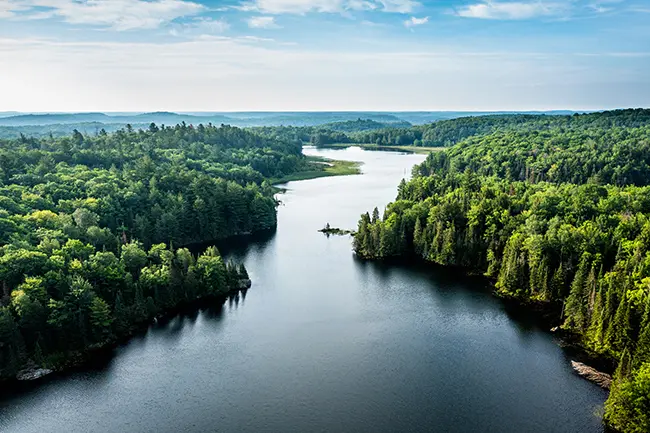
Tropical rainforests are hot and humid habitats with dense tree canopies and vines — an ideal environment for sloths to spend their days hanging and grazing.
As previously mentioned, the International Union for Conservation of Nature (IUCN) has red-listed the pygmy and maned sloths as critically endangered and vulnerable.
Although the Isla Escudo de Veraguas is uninhabited, tourism and locals who gather the area’s timber have significantly reduced the species population. Government protections are also proving ineffective. Without any actual enforcement, developers have sought to construct lodging and other infrastructure on the island to boost the tourism industry.
Sloths are also susceptible to habitat degradation. According to the World Wildlife Fund (WWF), the Brazilian Amazon rainforest lost 10,476 sq km from August 2020 to July 2021 — seven times the size of London. If current deforestation rates continue, scientists predict 40% of the Amazon will disappear by 2050.
Additionally, sloths are targeted by the pet trade, as poachers violently remove babies from their mothers and sell them. Due to their high sensitivity, many sloths suffer from trauma and become depressed, leading to death.
The typical sloth diet primarily consists of leaves, fruits, and green shoots. Occasionally, some munch on insect larvae and bird eggs for protein.
Their low-calorie meals match their slow digestion — their metabolic rate is 40% to 45% of what it should be for their typical body weight. With such a unique metabolism, sloths move exceptionally slowly, careful not to expend all their energy.
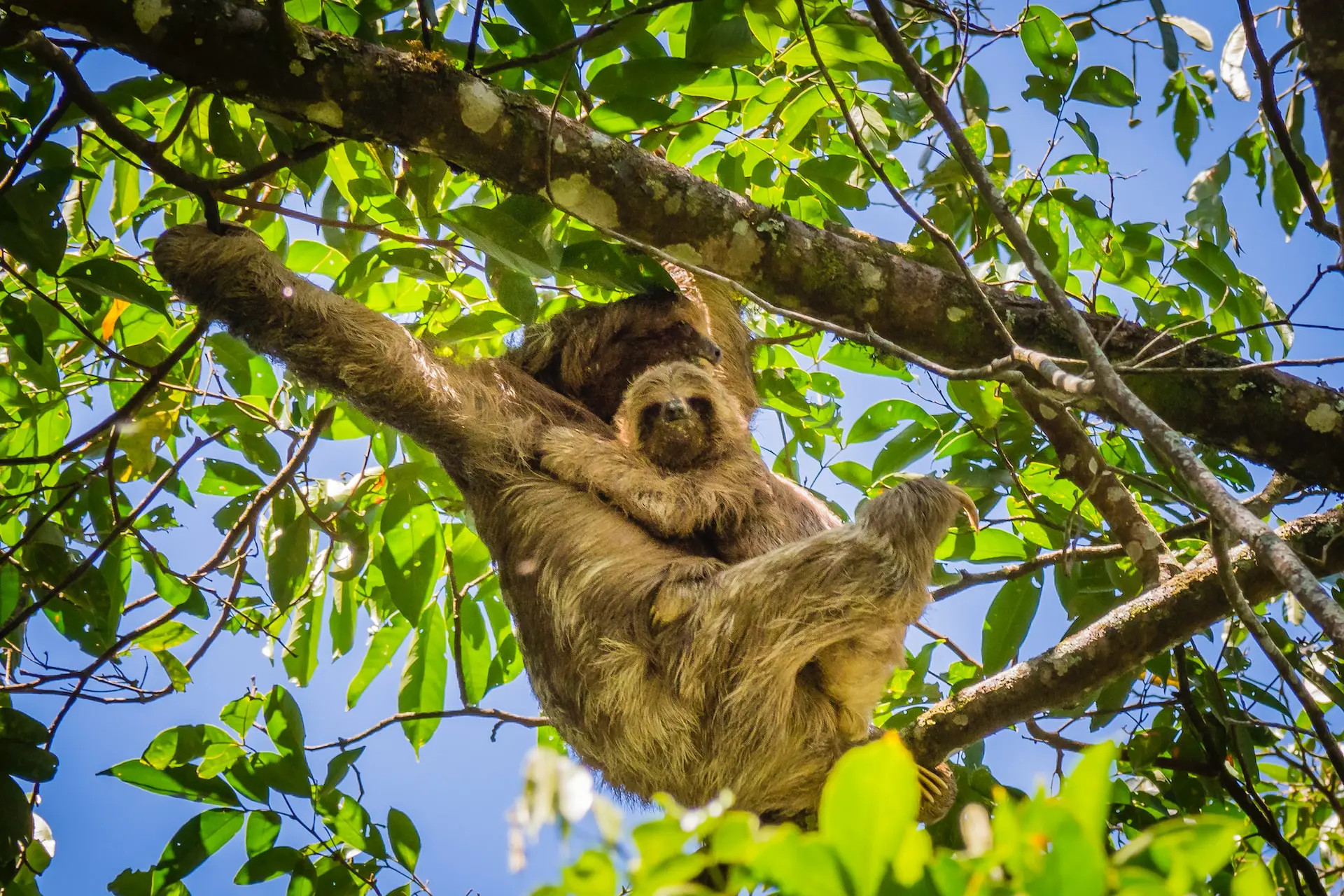
With a firm grip and long claws, sloths spend just about all their time hanging from the trees.
Most people know that sloths love to sleep. In fact, these nocturnal creatures sleep 15 to 20 hours every day and wake up to eat in the evening.
Sloths also breed and give birth in the trees — babies usually stay with their mothers for the first nine months.
Sloth fur is extremely coarse with grooves that make it ideal for blue-green algae growth. The sloths benefit from the green tint to camouflage themselves in the trees.
Their fur also attracts numerous insects, such as ticks, beetles, moths, and mites — scientists have referred to sloths as “mobile ecosystems” as they pick up bugs and microorganisms while moving through the canopies.
For the slow sloth, their fur becomes another food source for survival. Pyralid moths are a favorite delicacy, spending most of their lives on sloths’ backs.
Pyralid moths lay eggs and feed on sloth feces on the forest floor. Once mature, they fly up to the trees and situate themselves in the fur. Whenever sloths work their way to the ground to defecate, the moths feed and lay eggs on the fresh feces, and the lifecycle continues.
Efforts are ongoing to conserve sloth populations. This International Sloth Day, consider celebrating the species by giving back. Here are a few ways you can help.
Adopting a sustainable lifestyle and eco-friendly behaviors is integral to sloth conservation. Become a steward of sloths by reducing your carbon footprint and modifying your purchasing and consumption habits.
Sloths are spectacular creatures. It would be a shame if the species eventually became extinct at our hands. Raise awareness about sloths on International Sloth Day to give them a chance at survival.