We are reader-supported. When you buy through links on our site, we may earn affiliate commission.
A building has to earn confidence through years of everyday use, which makes durability a reasonable concern when unfamiliar materials enter the conversation about sustainability. Eco-friendly construction methods face that expectation alongside the demand for a smaller environmental footprint. Their appeal depends on making greener choices work in practice without asking occupants to accept less dependable buildings.
Buildings in the United States accounted for roughly 40% of total energy use and generated more than 30% of national greenhouse gas emissions in 2022. Reducing that footprint poses a substantial challenge for construction, putting the industry under pressure to reconsider how structures use resources.
The green building market reflects the interest in doing so, with estimates showing it was valued at about $530 billion in 2024. Projections put it at roughly $580 billion for 2025 and nearly $1.4 trillion by 2034, representing annual growth of about 10.2%.
Buyers and tenants may also see practical appeal in lower utility bills, comfortable interiors and properties that remain useful over time. Those priorities put everyday performance at the center of the conversation about what greener construction should deliver.
Sustainable materials need to meet the demands of their intended use, making toughness a matter of performance rather than appearance. The following approaches address that challenge in different ways while offering opportunities to reduce construction’s environmental impact.
Builders make rammed-earth walls by packing damp soil into temporary forms and compressing successive layers until they create a single continuous structure. The process differs from adobe construction, which uses dried mud bricks. Clay binds the compacted mixture while sand and gravel help maintain its shape, giving the finished wall stability through the combination of ingredients and careful workmanship.
The technique dates to around 5000 B.C.E. and has a history of use across Asia, Africa and South America. In fact, centuries-old Moroccan homes still shelter families today, offering tangible evidence of endurance in their continued use.
Life-cycle assessments suggest rammed earth walls can use 70% less embodied energy and produce over 90% less carbon than concrete or masonry alternatives. The savings depend partly on the soil’s source and the amount of cement in the mix, with locally sourced earth and less added cement generally offering greater environmental benefits.
Hempcrete combines the woody interior of hemp stalks with a lime-based binder to form lightweight insulation for the spaces within a supporting frame. Its durability depends on how well that infill holds up over time while the frame handles the building’s structural loads.
Artisan Charles Rasetti chose hempcrete for an oak-framed house renovation in Nogent-sur-Seine, France, in 1986. The infill remained in pristine condition 38 years later, as an inspection in November 2024 found it behind the lime-plaster exterior. Its condition offers evidence from an occupied building rather than a prediction based solely on laboratory tests.
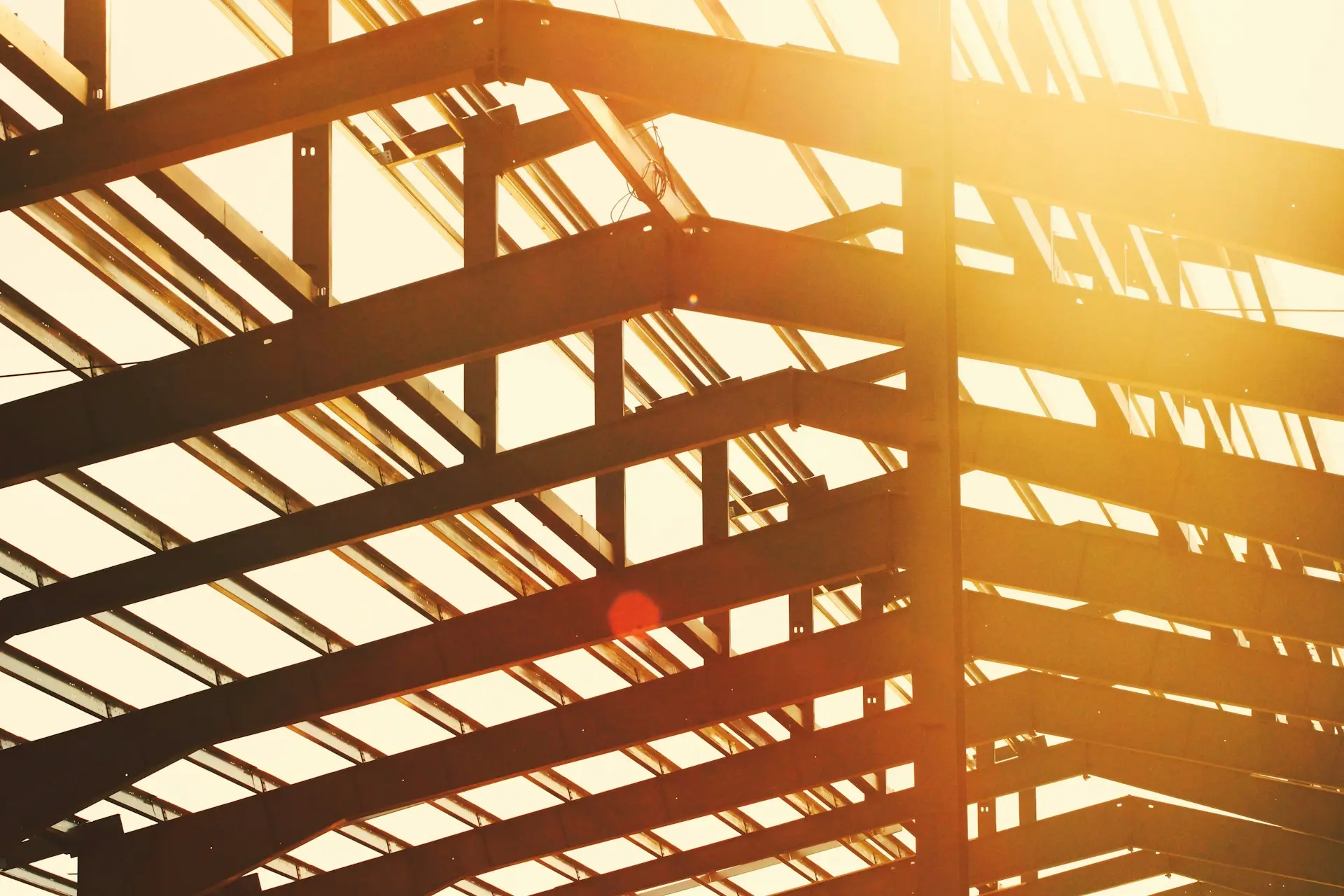
Steel can return to construction through two distinct processes, with recycling turning scrap into new products and direct reuse retaining existing beams or columns. The latter preserves more of the original component because it requires less physical transformation. The amount of additional processing therefore becomes part of the decision about how to source a project’s framework.
Case studies found that reusing structural elements reduced environmental impact by up to 63% compared with designs optimized to use less new material. The reported maximum is based on specific comparisons and provides a reason to consider available components before committing to an entirely new framework.
The European Union’s sustainable investment classification also includes a 70% secondary metals criterion that recognizes both reused and recycled sources. The threshold concerns qualification under this framework rather than a rule that every construction project must follow.
Bamboo’s rapid regrowth makes it an appealing renewable resource for applications that extend beyond decorative finishes into supporting components. Engineered beams and panels enable its use in manufactured building products.
Bamboo’s tensile strength is around 28,000 psi, a measure of resistance to pulling forces that helps explain its structural potential. The figure applies to bamboo generally rather than every engineered product and cannot establish suitability on its own. A proposed replacement for steel must meet the full demands of the application.
High-strength geopolymer concrete uses industrial byproducts, such as fly ash, along with chemicals that bind the mixture into a solid material. One studied formulation cuts emissions by 30% compared with conventional concrete while targeting demanding structural requirements. The approximate reduction indicates the potential to change the ingredients without abandoning strength as a design priority.
The same assessment calculated emissions to be nearly 60% lower than those of ultra-high-performance concrete and more than two-thirds lower than those of reactive powder concrete at equivalent strength levels. Matching those levels keeps the comparison focused on alternatives intended for similarly demanding work. The savings, nevertheless, depend on the formulations assessed rather than on setting an expected reduction for all green concrete.
Some of the most common questions about eco-friendly construction methods concern their environmental benefits, durability and suitability for load-bearing applications.
Eco-friendly construction methods aim to reduce the energy use, emissions or waste associated with buildings while meeting their practical needs. They include approaches based on natural resources as well as ways to reuse existing components.
The examples discussed show that rammed earth can endure for centuries without being stronger than concrete. Its potential advantages include a long history of use and lower production energy and carbon emissions.
Steel frameworks can incorporate products containing recycled scrap or existing components selected for reuse. Recycling creates new products from recovered material while direct reuse keeps more of an original beam or column intact.
The strongest case for eco-friendly construction methods comes from matching each option to a role it can fulfill reliably, with environmental goals informing the decision. Thoughtful selection gives different approaches room to contribute without requiring one material to do everything. The result worth pursuing is a built environment that serves communities well while making better use of resources.